

The new Shadowcat Foundation Series explained:
A faster path to companion vessel ownership

There is a reason owners who have a Shadowcat rarely consider parting with it. Across the fleet, vessels like Hodor and Wayfinder field enquiries almost daily from buyers hoping to acquire them - and their owners say no.
These are not vessels people walk away from. They are vessels built to deliver market-leading carrying capacity, the ability to launch and recover large tenders with ease and genuine fuel efficiency, all wrapped in a proven pedigree that has made Shadowcat one of the most distinctive names in companion vessel design. Owning one means owning real capability and real freedom on the water - and that is precisely what makes the next chapter of the story so compelling.
Rather than asking owners to wait years for the kind of vessel that rarely comes to market, Shadowcat's new Foundation Series offers three 67-metre configurations built on proven naval architecture and real-world fleet data, with delivery targeted at approximately 18-20 months from contract. For owners planning a new-build superyacht, the companion vessel has traditionally entered the conversation late - an afterthought bolted onto a programme already years in motion. Foundation is designed to change that timeline entirely, putting the Shadowcat experience within reach far sooner than owners might expect.

Why Foundation exists
Owners considering a companion vessel have historically faced two options, each with its own friction. Starting from a blank sheet of paper means months of design iteration before construction even begins.


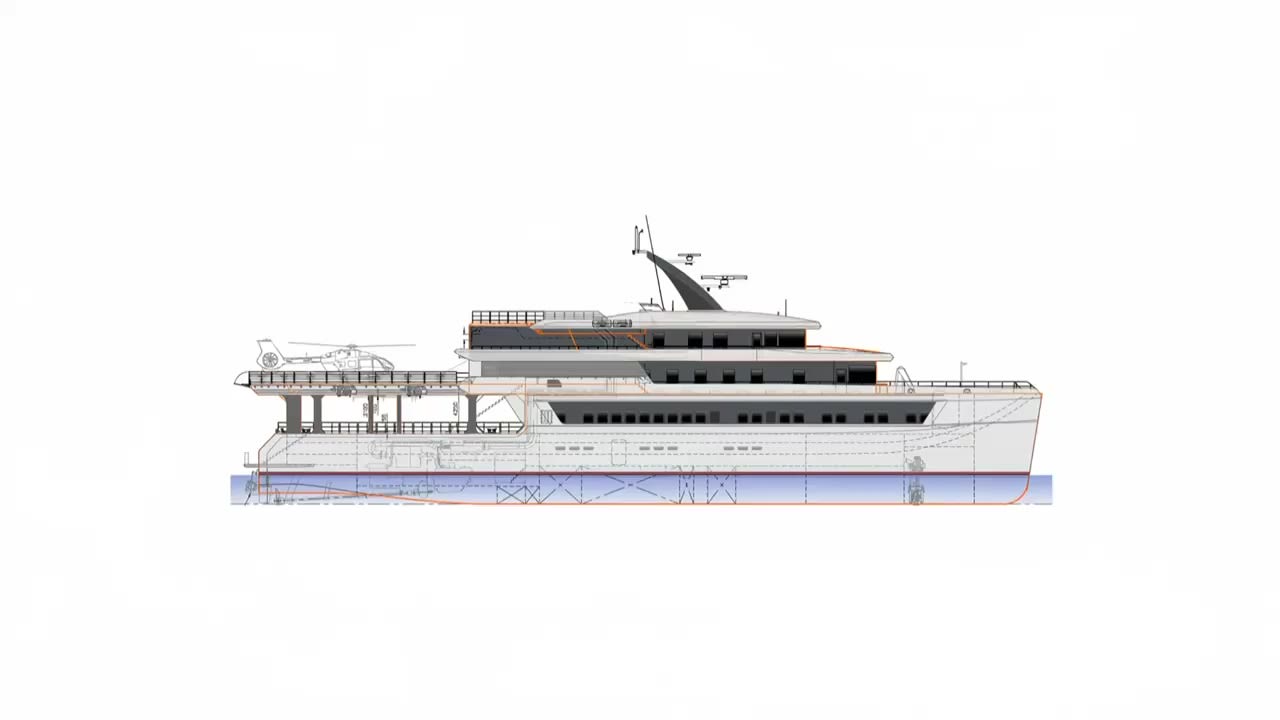
Converting an existing commercial vessel can look like a shortcut since the platform already exists, but that platform typically arrives with years of demanding service behind it, along with maintenance history, machinery and structural constraints that must be assessed and adapted for an entirely different purpose. The unknowns in a conversion often surface only once work is already underway.
Foundation offers a third path.
Above: The Shadowcat Foundation Series Altitude configuration
Rather than beginning from scratch or inheriting the compromises of a repurposed vessel, Foundation is a new build designed from the outset for the companion role, drawing on naval architecture and engineering already proven across Shadowcat's operating fleet.
Individual vessels are logging approximately 20,000 nautical miles a year, generating substantial real-world feedback that has fed directly into Foundation's base specification, including continued development of HUG SCR systems and Veth bow thrusters, with AV/IT and bridge equipment that can be aligned with the mothership where appropriate.
The exterior styling of Basecamp and Altitude was developed by Theodoros Fotiadis of T. Fotiadis Design GmbH, while Waypoint's distinctive look comes from Michael Anthony Bagdonas - giving each configuration its own identity while retaining the engineering DNA that has made the existing fleet so sought-after.

Three configurations and one foundation
Every Foundation vessel shares the core attributes that define the Shadowcat platform: catamaran stability, generous operational deck space, shallow draught, redundancy, serious tender and equipment carrying capacity, and certified landing capability for both H145 and H160 helicopters.
From that shared base, owners select the configuration that matches their intended use.
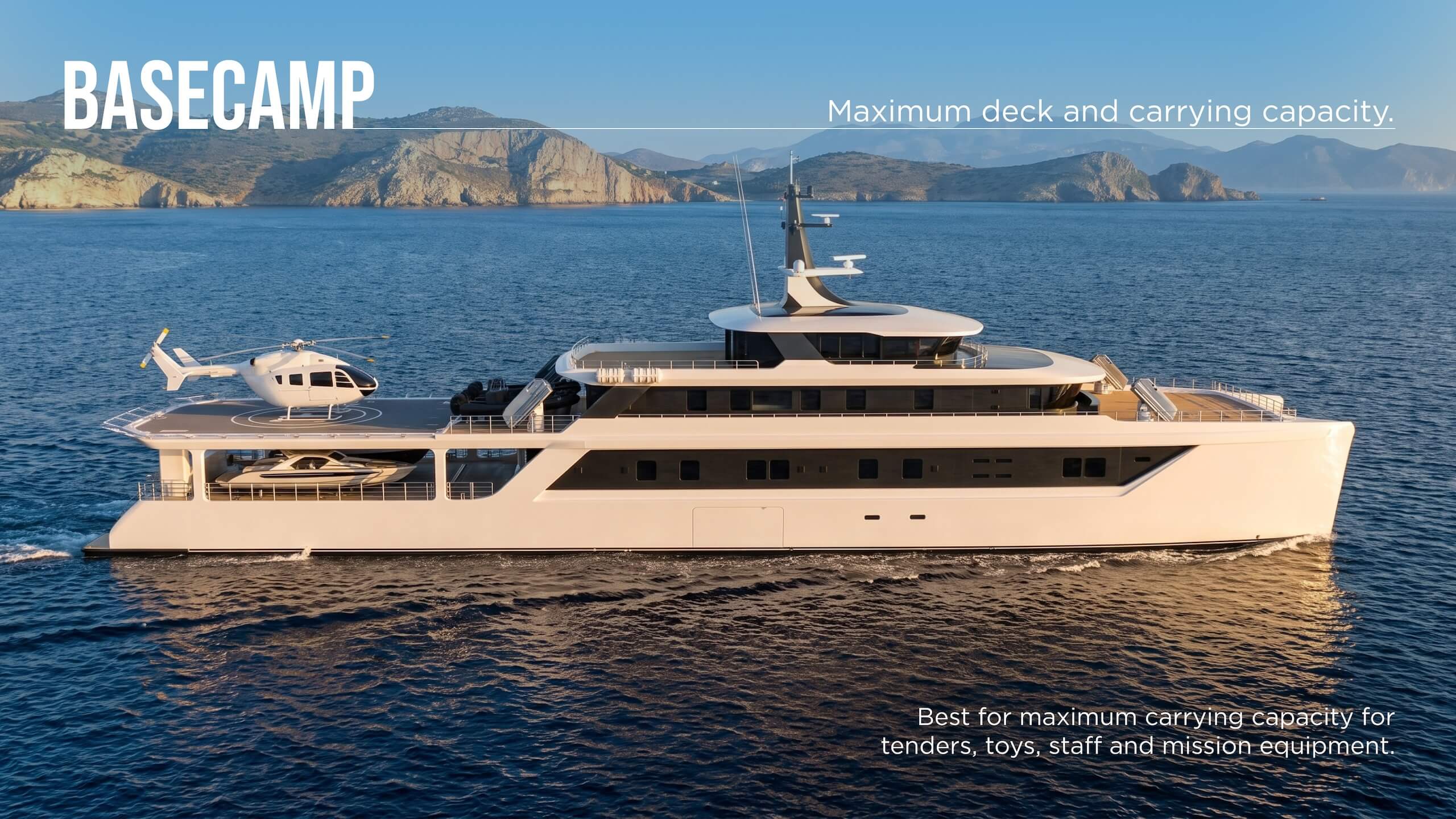
Basecamp
Basecamp maximises carrying capability for tenders, equipment and people, without a helicopter hangar - suited to owners whose programme centres on toys, diving equipment or expedition gear rather than aviation.
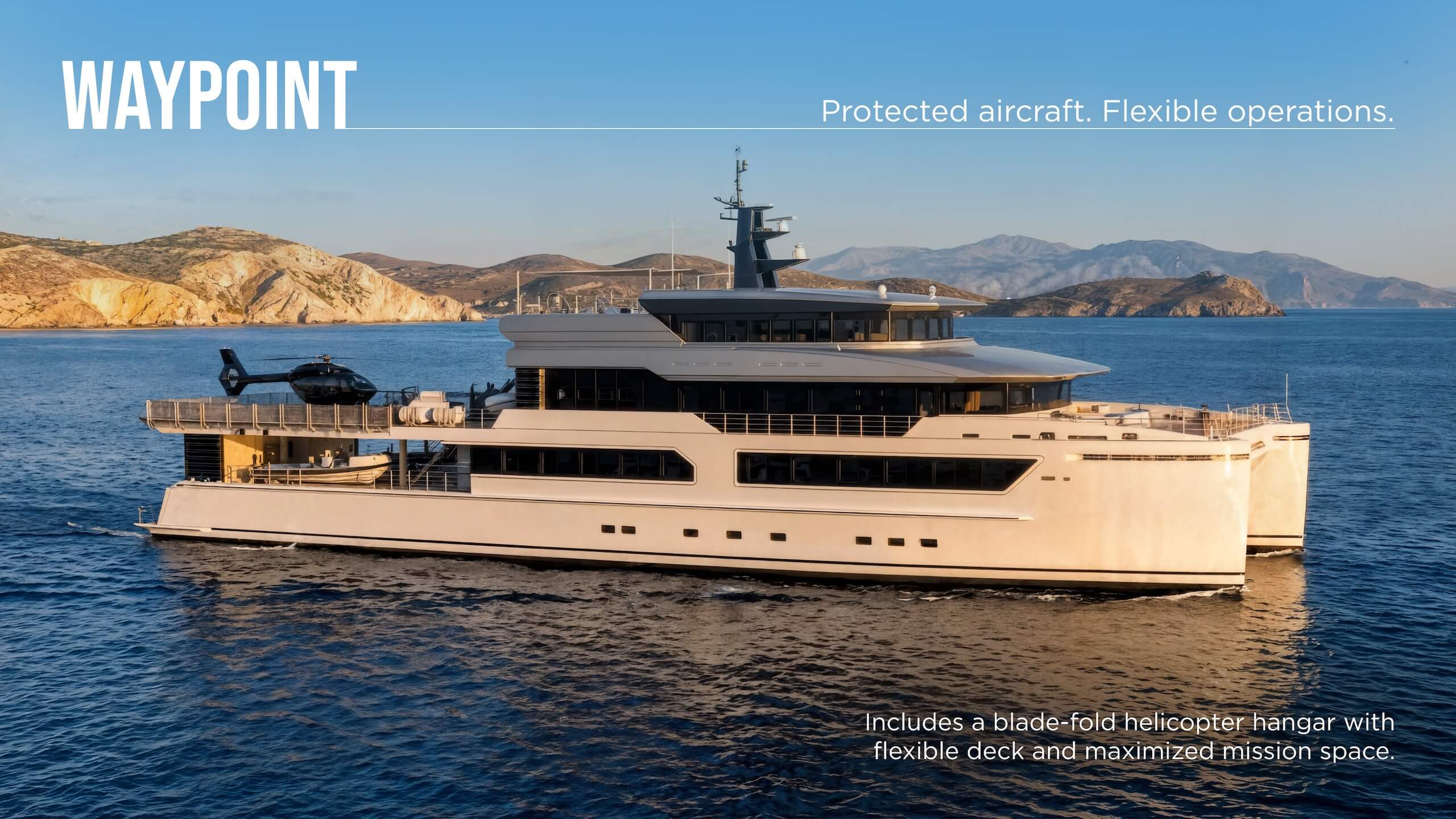
Waypoint
Waypoint introduces a blade-fold helicopter hangar while retaining considerable flexibility for tenders, equipment and mission spaces, offering a middle ground between carrying capacity and aviation support.
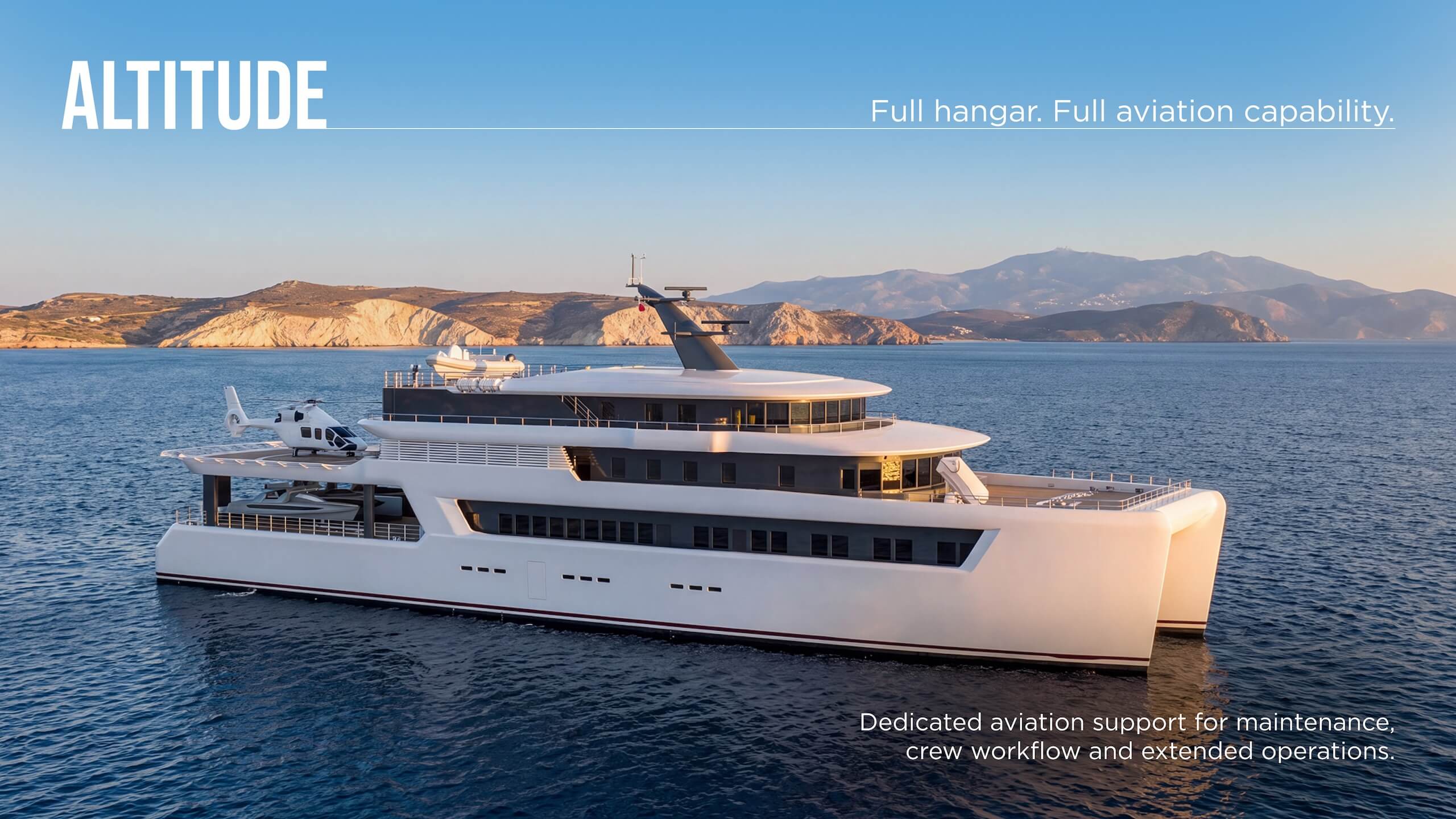
Altitude
Altitude is the most aviation-focused configuration, built around a full helicopter hangar for owners whose programme depends on intensive helicopter operations.
Beyond the configurations themselves, Foundation reflects a broader shift in thinking: that the mothership and companion vessel should be planned as a single programme from the outset, rather than as sequential decisions. Planning both together allows owners and their teams to make better-informed calls about where tenders, aviation, specialist crew and equipment requirements are best housed - on the mothership, on the companion vessel or split between the two.
The accelerated delivery timeline sharpens this opportunity further. Because Foundation can be delivered in roughly 18-20 months, an owner may take possession of their Shadowcat well ahead of a new-build mothership still under construction. That means earlier access to tenders, toys and aviation, and potentially the ability to begin realising charter-related benefits before the mothership itself is complete.
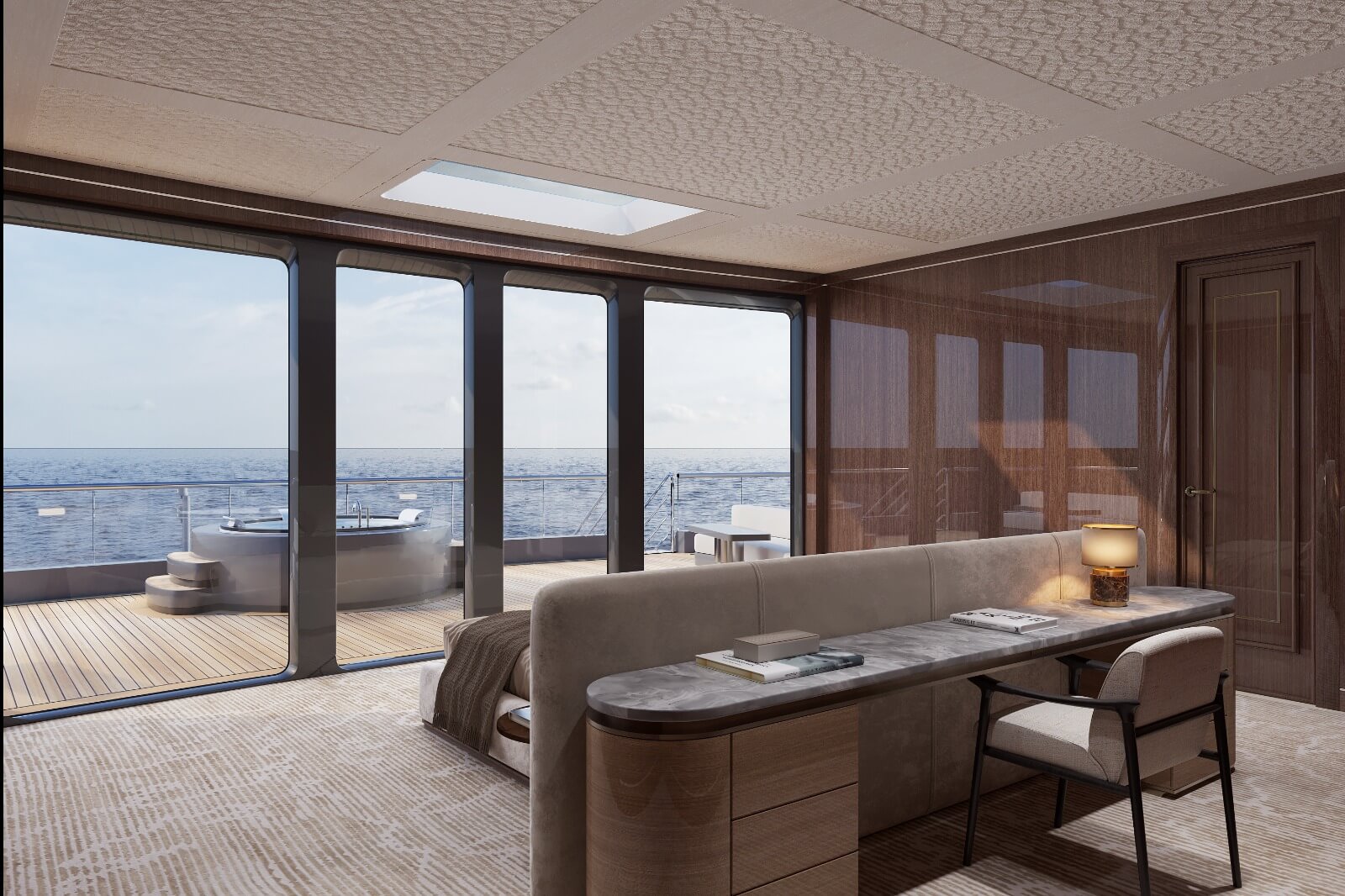
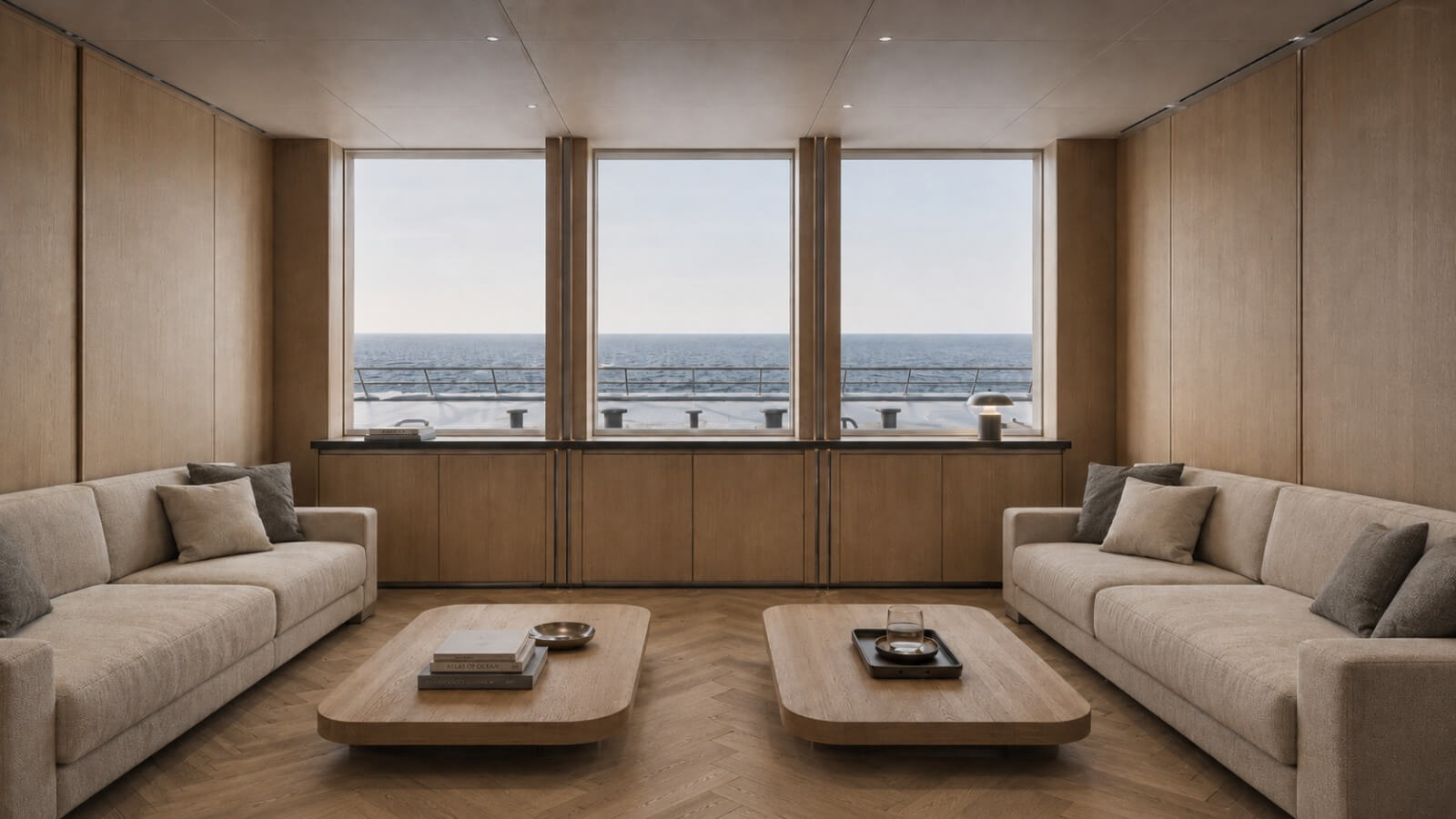
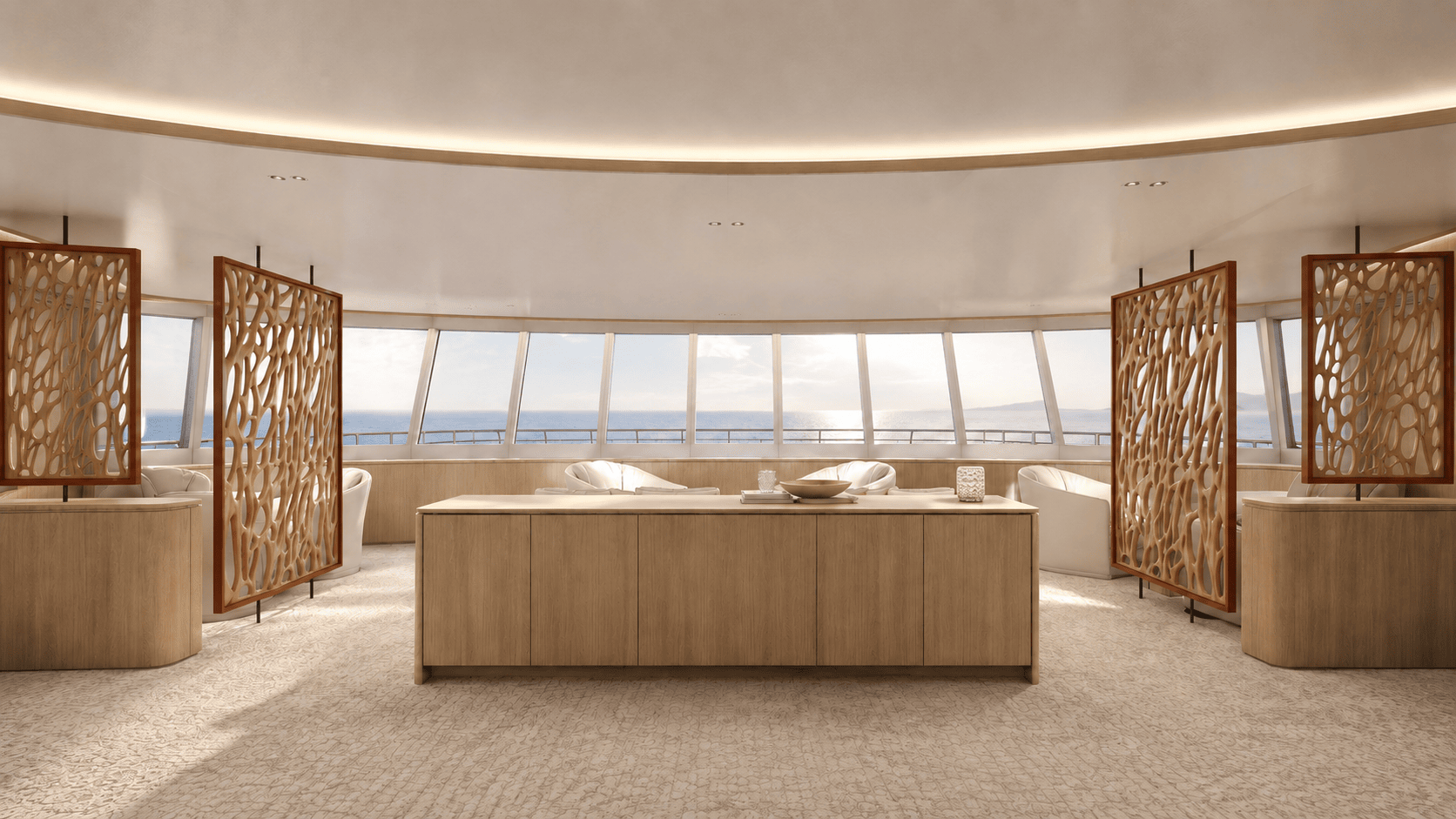
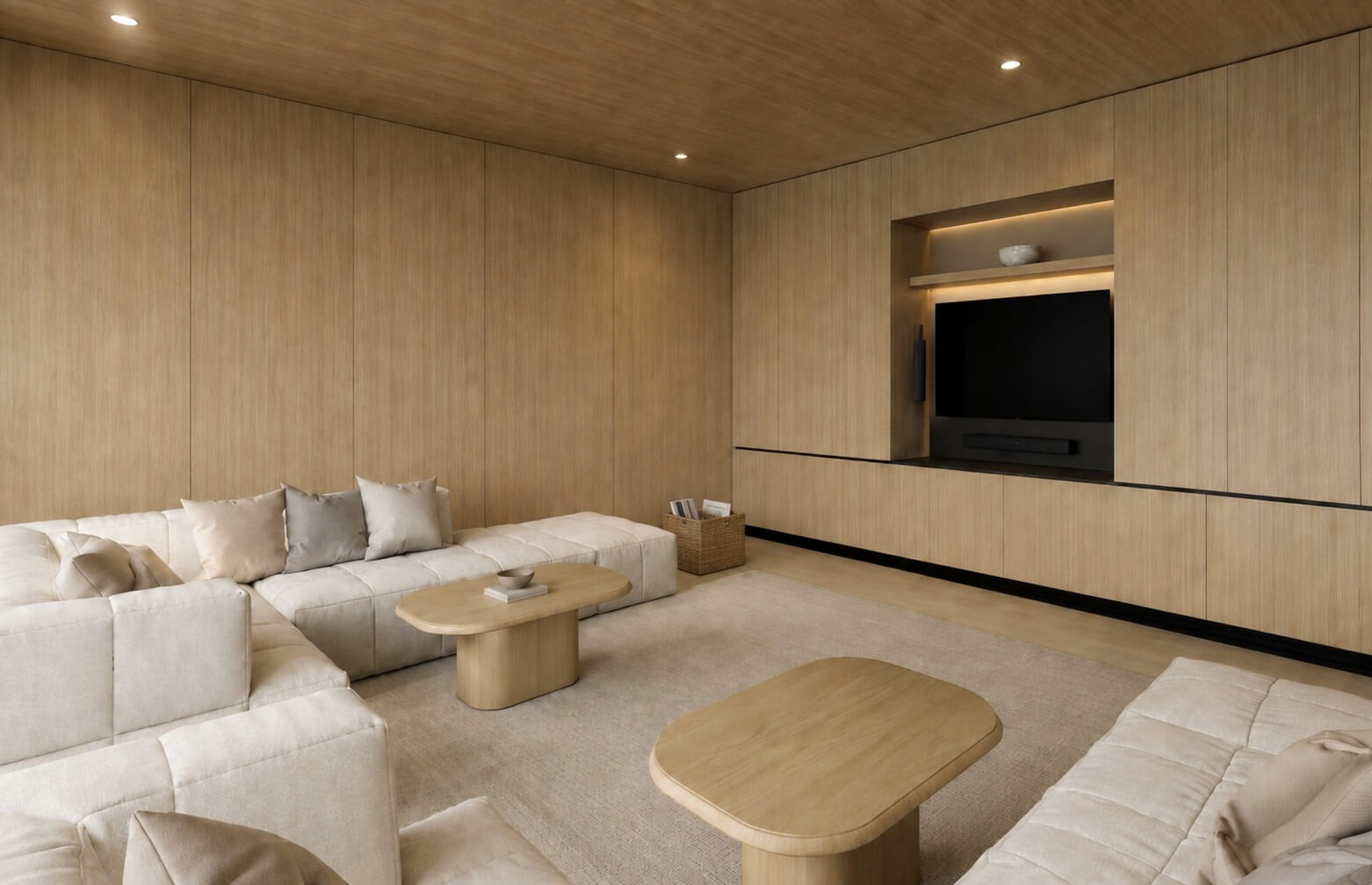
"Foundation is really the result of everything we have learned from designing, building and operating Shadowcats,” says Jennifer Smith, commercial director of SHADOWCAT.
"We know what works, we have real-world experience behind the platform, and we can now give owners a much faster path to a vessel that fits the way they actually want to operate. It is still their Shadowcat. We have simply done much more of the work before they arrive."
"We can now give owners a much faster path to a vessel that fits the way they actually want to operate. It is still their Shadowcat. We have simply done much more of the work before they arrive."
This philosophy is what distinguishes Foundation from both the custom-build and conversion routes. It is a vessel shaped by two decades of accumulated engineering knowledge, delivered on a timeline that makes planning a modern yacht programme, mothership and companion vessel alike, considerably more straightforward.
Learn more about the Shadowcat Foundation Series online or contact the Shadowcat team directly to discuss further.
Sponsored content created for Shadowcat