


On board with Jeremy Pilkington

LIVES: YORKSHIRE AND MALLORCA
PARTNER: WENDY HYETT
FAMILY: FIVE GROWN-UP CHILDREN AND FOUR GRANDCHILDREN
BUSINESS: CHAIRMAN AT VP PLC
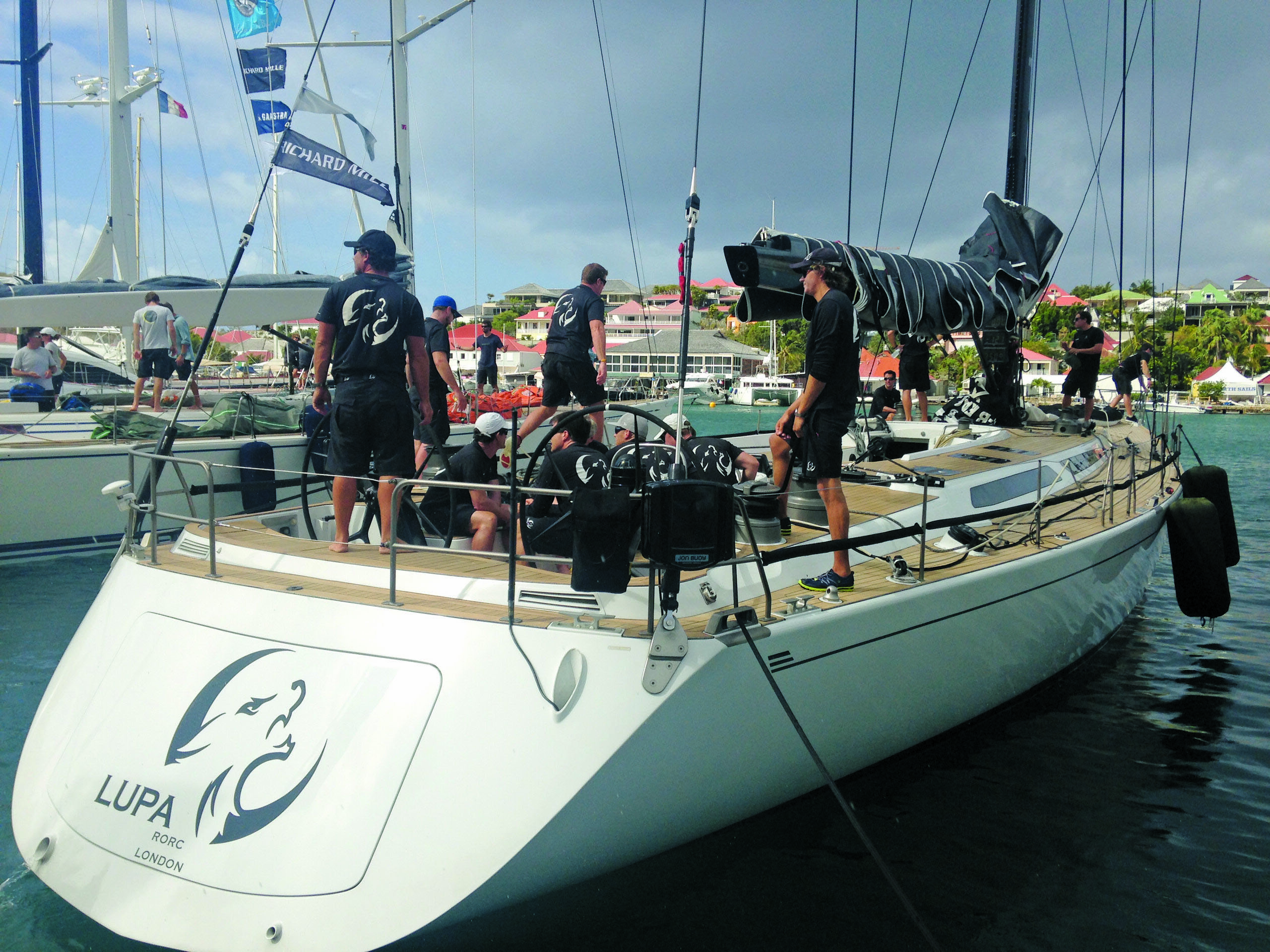
Sometimes it’s the ones you don’t catch that stick in your mind. That’s certainly the case for Jeremy Pilkington. No, we’re not talking fish here, but offshore yacht races. The Rolex Sydney Hobart, to be precise. It’s 2015 and Pilkington is on the cusp of selling his Baltic 78, Lupa of London, after four years of remarkable success at some of the world’s most competitive regattas. From the inaugural RORC Transatlantic Race in 2014 to the Maxi Yacht Rolex Cup and the Rolex Fastnet, he has amassed an impressive cabinet of trophies. But perhaps the toughest of them all still eludes him.
“It was starting to be an obligation to use the boat rather than a pleasure, so when we won the Voiles de St Barth in 2015, we decided we’d put her in for one more race: the Sydney Hobart,” he tells me. “In Australia, the whole crew had brought family, so we were a big group of 50 people. We celebrated Christmas then got ready for the race.”

Pilkington’s Baltic 78 Lupa of London during the 2013 Rolex Fastnet Race, when she was second in her class || COURTESY OF OWNER
Pilkington’s Baltic 78 Lupa of London during the 2013 Rolex Fastnet Race, when she was second in her class || COURTESY OF OWNER
“As l lined up for the start, a TP52 crossed us on a port tack. They realised they weren’t going to make it and tacked back right on top of us. We couldn’t avoid the collision and took the arse end off them – there wasn’t much damage to us. We lost our bowsprit, which would have compromised us a little, although we could have sailed without it. But the rigging touched and, as we had carbon rod rigging, the skipper was quite rightly concerned about non-visible damage. The weather forecast was for a gale that night and we felt it was too dangerous.”

Pilkington and partner Wendy Hyett || COURTESY OF OWNER
Pilkington and partner Wendy Hyett || COURTESY OF OWNER
Pilkington describes the forced retirement as “quite a blow” in dry understatement. “It was to be the pinnacle – the crowning glory for our racing career on Lupa.” He grimaces in the retelling, then forces his features into a wan smile. He is an easy man to talk to – full of reflections and stories, but you can tell that this cuts deep. “My friends know not to raise it,” he says – only half in jest. “Nothing has dulled the pain of that experience.”

A collision at the start of the 2015 Rolex Sydney Hobart forced Jeremy Pilkington to retire || TAKE 2 PHOTOGRAPHY
A collision at the start of the 2015 Rolex Sydney Hobart forced Jeremy Pilkington to retire || TAKE 2 PHOTOGRAPHY
He came late to the yachting world. “I would have been in my fifties,” Pilkington says after a moment’s thought. There are dim memories of sailing lessons in Salcombe on the South Coast and high jinks in yawls as a student. “I thought sailing was a useful skill to have, and very romantic!”

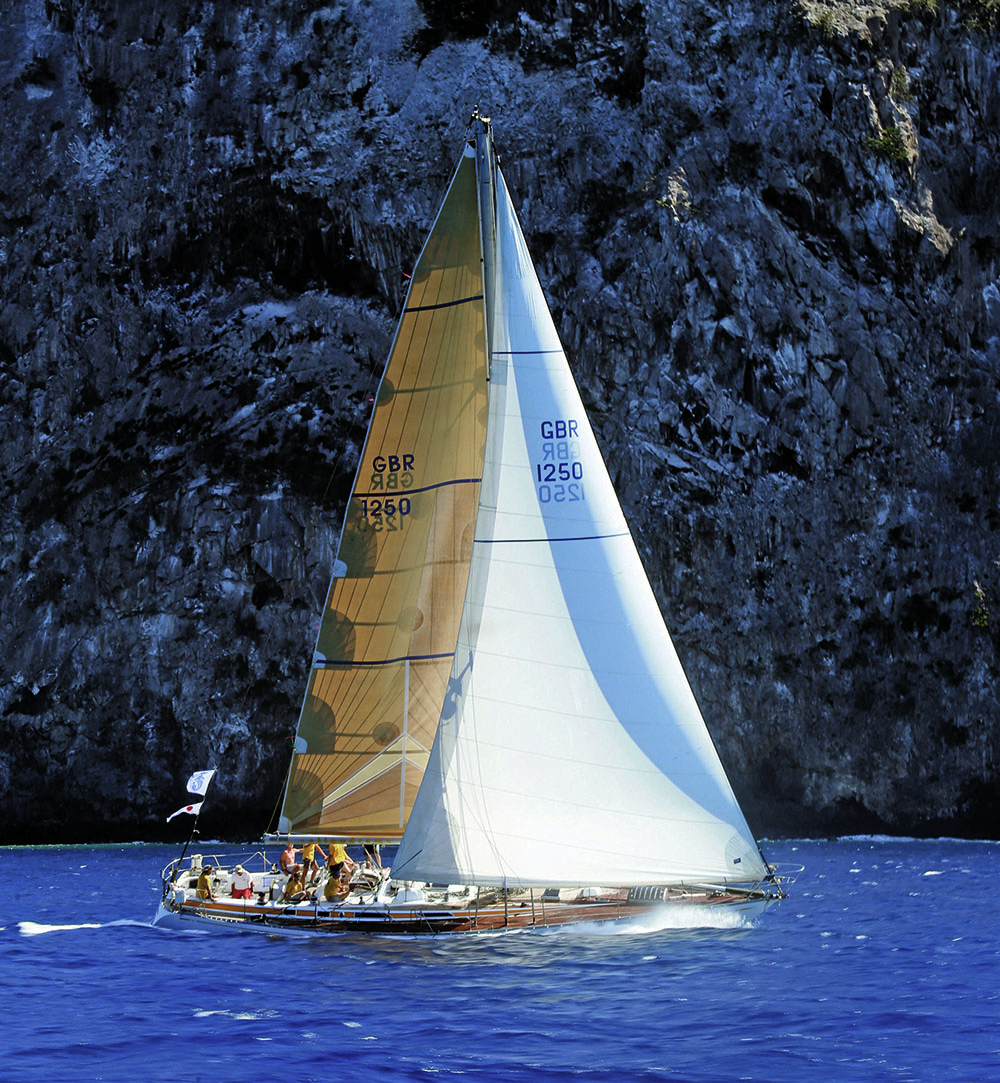
The Swan 65 Sayula II that won the inaugural Whitbread Round the World Race in 1972-73 and inspired Pilkington || JONATHAN EASTLAND - AJAX - ALAMY STOCK PHOTO
The Swan 65 Sayula II that won the inaugural Whitbread Round the World Race in 1972-73 and inspired Pilkington || JONATHAN EASTLAND - AJAX - ALAMY STOCK PHOTO
He also remembers watching with awe in 1972 as the first Whitbread Round the World Race was won by a Mexican amateur sailor in the ketch-rigged Swan 65 Sayula II. So, when he finally set his sights on a boat of his own, he naturally turned to Nautor Swan. He didn’t start small either, going straight in with a 57-footer of Sparkman & Stephens vintage. “I love that era of Swans,” he says with a broad grin. “She was very run down and in rather poor condition, but she sailed very enjoyably as a family cruiser for a couple of years.
He came late to the yachting world. “I would have been in my fifties,” Pilkington says after a moment’s thought. There are dim memories of sailing lessons in Salcombe on the South Coast and high jinks in yawls as a student. “I thought sailing was a useful skill to have, and very romantic!”

He also remembers watching with awe in 1972 as the first Whitbread Round the World Race was won by a Mexican amateur sailor in the ketch-rigged Swan 65 Sayula II. So, when he finally set his sights on a boat of his own, he naturally turned to Nautor Swan. He didn’t start small either, going straight in with a 57-footer of Sparkman & Stephens vintage. “I love that era of Swans,” he says with a broad grin. “She was very run down and in rather poor condition, but she sailed very enjoyably as a family cruiser for a couple of years.
“I then did a silly thing and bought another Swan 57 in very good condition. It was not an experience to repeat. I thought it would be cheaper to sell the existing boat as-is and buy a new one in good shape. That plan didn’t make contact with reality; in the end, I had to do her up to sell her.” Sailing in UK waters and the Mediterranean, Pilkington learned an important lesson. “I recognised that you have to have something lighter and quicker to make the most of light airs.”
That’s when a Baltic 78 appeared on his radar. “I went up to visit and meet PG [Johansson, the founder] and they were one of the major yards to embrace carbon technology from the beginning.” The Baltic 78 in question was built as a fast cruiser/racer, and this particular one had a canting keel. “Once you look at the polars for a canting keel, you realise it gives you an amazing advantage cruising or racing,” says Pilkington. “I never understood why it wasn’t more widely adopted.”
The boat is 33 metres of classic styling, recalling the gentleman’s yachts of yesteryear, but with a super efficient hull

Renamed Lupa of London, the boat served well for a couple of years of family cruising holidays with partner Wendy Hyett and their five children. But then something happened which tore up that cosy notion and set Pilkington on the path to racing obsession.
“One winter when we laid her up, we did an ultrasonic check and found the mast wasn’t terribly strong. We had to put a new one on, with new deck gear, and suddenly we had a platform for racing. My skipper at the time came from a racing background and was always encouraging me. In no time, racing really became our passion and the cruising fell by the wayside.”

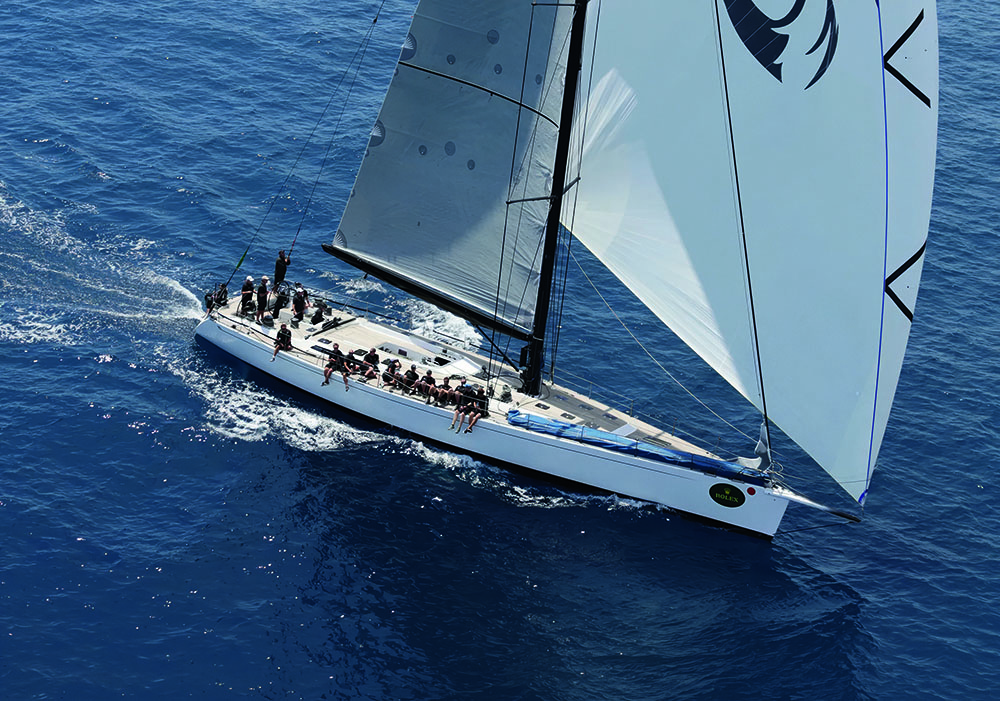
Pilkington’s Baltic 78 Lupa of London during the 2014 RORC Transatlantic Race, when she won first overall || ROLEX - KURT ARRIGO
Pilkington’s Baltic 78 Lupa of London during the 2014 RORC Transatlantic Race, when she won first overall || ROLEX - KURT ARRIGO
He pauses introspectively for a moment before adding: “It did rather overtake the use of the boat, although Wendy remained our mascot and supported every race.”
Reading between the lines, it sounds as if there may have been little time outside racing and business, as Pilkington poured his other efforts into running the PLC that his father had established in the 1950s. Originally specialising in plant hire for the construction industry, the firm reaped the rewards of Britain’s roadbuilding programme in the 1960s. Now known as Vp, it has expanded into railways, utilities and other big infrastructure projects.

 Business renamed Vp PLC
 Wins the inaugural RORC Transatlantic Race in Lupa, plus division wins at the Giraglia and in Porto Cervo
 Lupa of London sold
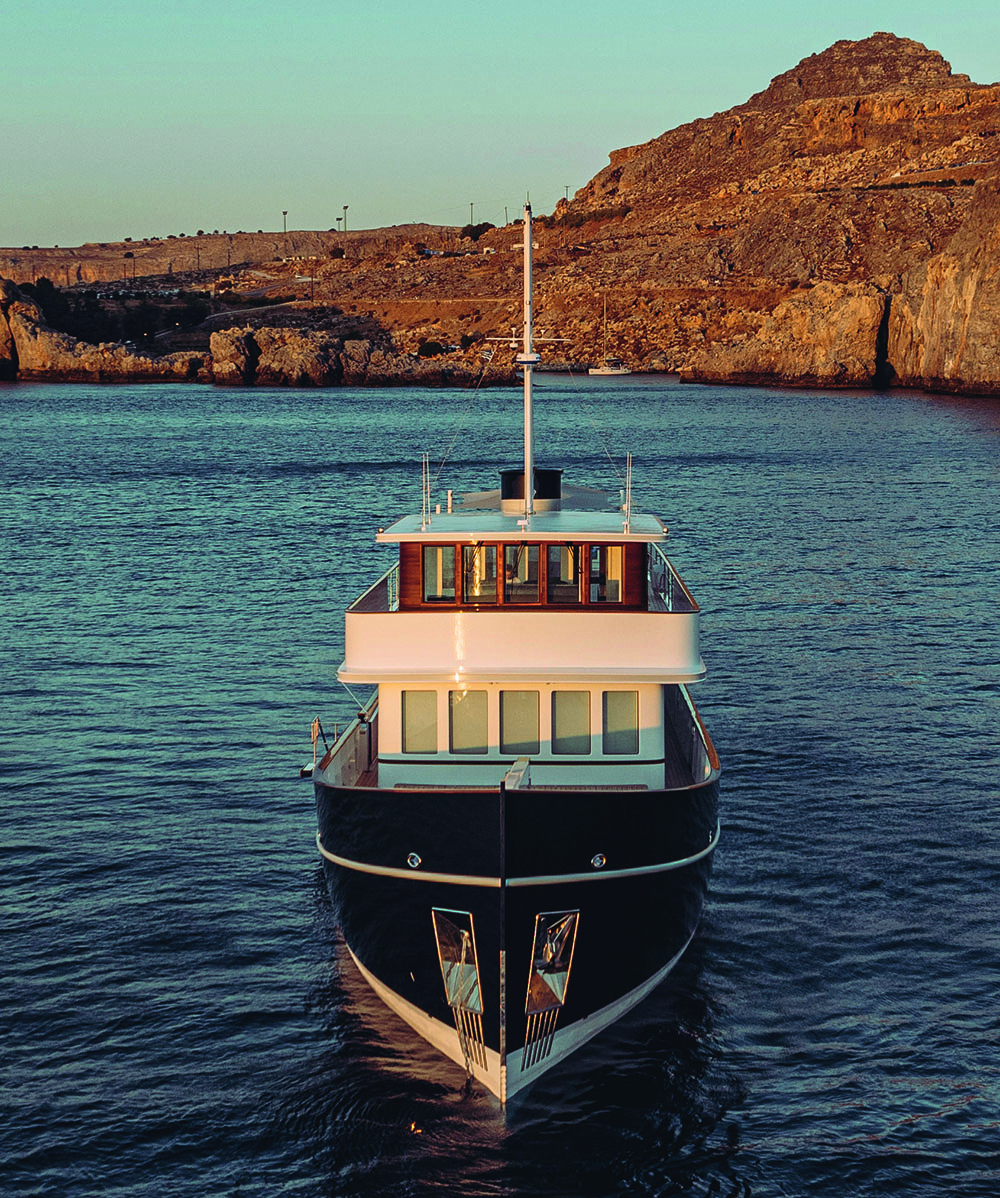 Hoek-designed Far Niente delivered
He was obliged to step in to run the business earlier than he might have liked after the premature death of his father in 1978. “I still think of it as ‘his’ business that I carry on. Even though it has reinvented itself and remade itself several times over. We now have 2,500 employees in the UK and Ireland, Germany, Australia and southeast Asia.”
He is resigned to the fact that his children won’t take the reins at Vp when he does step back. “Things were different 50 years ago,” he muses. “Governance was much less prescriptive, so it was fairly routine for the son of a major shareholder to come into the business and play a major role. But I wouldn’t recommend PLC life to anyone now – it’s very rules-based and bureaucratic, which has squeezed a lot of the fun out of it.”

|| COURTESY OF OWNER
|| COURTESY OF OWNER

Pilkington on site at Vp, the business he took over from his father || COURTESY OF OWNER
Pilkington on site at Vp, the business he took over from his father || COURTESY OF OWNER

|| COURTESY OF OWNER
|| COURTESY OF OWNER
Pilkington is looking to step back from Vp, but if he thought his yacht-owning days were over with the sale of Lupa, he didn’t reckon on Dutch designer Andre Hoek and his project to convert a pre-1914 herring lugger. “The visuals were so lovely that I had a conversation with Andre about recreating it,” he says. “It went quiet during Covid, but then I resurrected the plans. I’ve always loved Hoek-designed boats – they’re so beautiful.”
“My skipper at the time came from a racing background. In no time, racing really became our passion and the cruising fell by the wayside”
Pilkington went as far as buying a suitable hull and shipping it to Turkish yard SES, before he discovered the cost of coaxing the mix of riveted and welded steel plating back to health. “We found it would be very expensive to get it certified for modern commercial standards, so we literally scrapped it for road plates!”
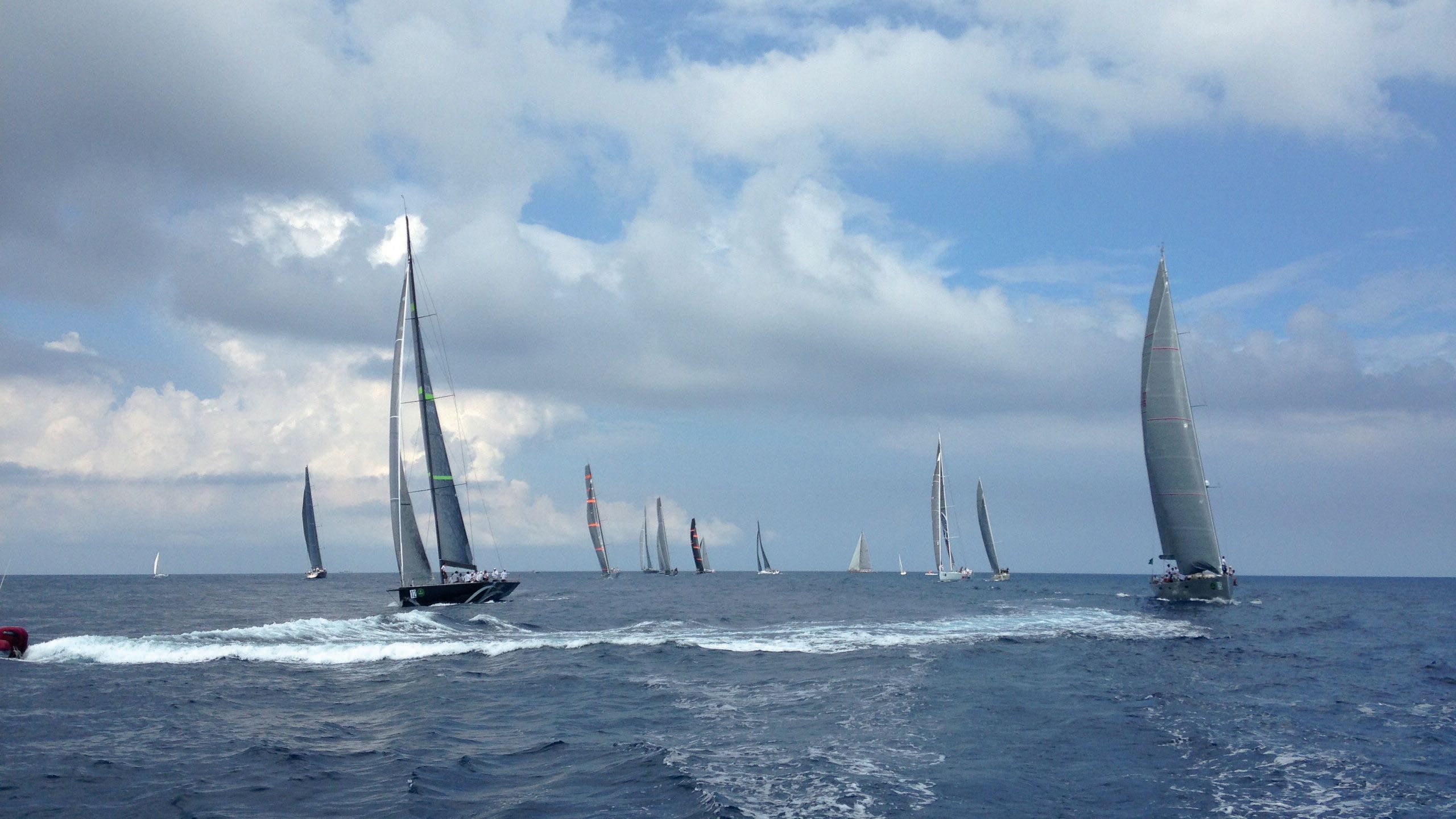
Lupa of London competed in and won the Mini Maxi Racer/ Cruiser Class at the 2014 Maxi Yacht Rolex Cup in Porto Cervo || COURTESY OF OWNER
Unwilling to let go of the idea, he explored a new build with the same Hoek–SES team. This came to fruition in 2024. The boat is 33 metres of classic styling, recalling the gentleman’s yachts of yesteryear, but with a super-efficient hull and propeller design that allows 3,750 nautical miles at 10 knots. Besides her five cabins, there’s an upper saloon with a long aft deck and a built-in crane for tender handling. She’s called Far Niente, which roughly translates as “sweet idleness”.
To my surprise, Pilkington has put her up for sale already. “This is where yachting and idiocy come together very neatly,” he explains candidly with a jolly shrug. “I’d never used a motorboat before and when I finally got on board after the launch, I was surprised how different from sailing it was.
Why didn’t we just charter a motorboat to see how we liked it? I’m more impetuous than that! Far Niente is a gem inside and out, but I never realised I was such a sailor at heart!”

Pilkington's father started the business in the 1950s || COURTESY OF OWNER
Pilkington's father started the business in the 1950s || COURTESY OF OWNER
Like many a racer, Pilkington misses that connection with the elements and the responsiveness of a boat under sail. “I see yacht racing as a displacement boat activity,” he says.
“The idea of finishing the regatta, then putting two or three family members and the dog aboard and going cruising round the island: that is the unrealistic, romantic illusion I have. What’s the purpose otherwise?”
First published in the August 2026 issue of BOAT International. Get this magazine sent straight to your door, or subscribe and never miss an issue.