

ON
BOARD
WITH

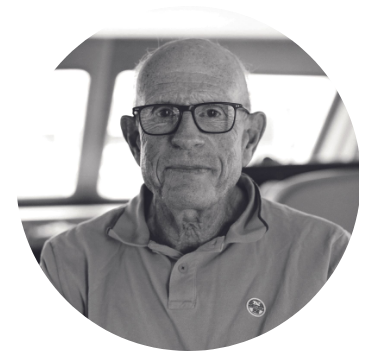
On board NorthLight with Tom Whidden


The America’s Cup-winning sailor tells Katia Damborsky how he fell in love with competitive sailing, and how his boating takes a more relaxed pace nowadays on his Grand Banks 85
BORN 1947, NEW YORK CITY
LIVES BETWEEN ESSEX, CONNECTICUT, AND NEW YORK CITY US
PROFESSION SAILMAKER AND PROFESSIONAL SAILOR
SPOUSE BETSY CHILDREN AVERY AND HOLLY
BOATS HE’S OWNED AN EASTBAY 43, EASTBAY 55, TWO GRAND BANKS 60S, GRAND BANKS 85
FIRST BOAT A BLUE JAY DINGHY, BOUGHT AT AGE 10 WITH HELP FROM HIS DAD
Tom Whidden has owned five yachts in his life and been part of eight America’s Cup campaigns. But before that, there were a few turning points in his life. One of them happened on a windy but sunny day in Florida in January 1979, when he and his crew finished in the lead after two of six races at SORC’s annual midwinter series between Tampa Bay and Nassau in the Bahamas.
The boat that had come in second place was helmed by Dennis Conner, a sailing champion and future America’s Cup winner who was described in a New York Times article in the same year as “a formidable skipper”. He marched up to Tom Whidden and introduced himself.


COURTESY OF OWNERTom Whidden has made of career around sailing yachts, but owns a motor yacht, the Grand Banks 85 NorthLight (above), as a base for sailing and for cruising New England with his wife
COURTESY OF OWNER
Whidden, at the time 30 years old and working for a sailmaking company called Sobstad Sails, knew who Conner was. “You’re beating me,” Conner told Whidden. Whidden tried to tell him it was early days, with four races left on the agenda, but Conner wasn’t listening. “And the guys like you,” said Conner thoughtfully. “What guys?” Whidden wanted to know.
Conner asked Whidden where he was headed after the race, and Whidden told him he was going home to New England. “Good, I’ll go with you,” said Conner, a California native. “You’re not listening to me,” Whidden told him, recounting the tale to me almost half a century later. “I’m going home to see my family and to go to work, and you live in San Diego, and I’m going to Hartford, Connecticut, and there could not be any further apart cities, you know?”
But Conner insisted, and the pair ended up making the three-hour flight together, fuelled by rum and tonics and conversation about their respective sailing careers. Conner started talking about his programme for the 1980 America’s Cup the following year and, almost out of nowhere, he invited Whidden to be his trial skipper. “It was heady stuff. If you think about things that happened in your life, that was one of the big ones,” recalls Whidden.


“I don’t think my dad thought I’d amount to much being a sailmaker, but I was a glutton for all that I could learn”
Being selected to be part of the America’s Cup usually involved a long process of vetting and try-outs, but for Whidden, the deal was as good as done on that aeroplane. Dennis Conner saw Whidden’s potential, not just as a sailor, but as a team player who would gel well with the crew.
Whidden started out as a trial skipper for the 1980 America’s Cup (a win), and then as a permanent member of the crew for eight subsequent editions of the Cup, devoting the next quarter of a century to the sport.
Participating in the America’s Cup had been a dream of Whidden’s since his formative years, but at the point that Conner approached him, he “didn’t have a clue” how to go about it. Actually, dream might be too soft of a word: it was more of a goal for Whidden.
When he was around 16, he set out three main goals for his future: becoming a sailmaker, trying for the America’s Cup and racing in the Olympics. By the age of 30, he had already achieved the first two. “I think you can do almost anything if you really set your mind to it,” says Whidden, although he acknowledges he grew up with privilege.


ADOBE STOCKMaine is a favourite cruising ground
ADOBE STOCK
Whidden started sailing at the age of 10, learning how to tack and gybe alongside his advertising executive dad (“like on Mad Men”) in the waters of Westport, Connecticut. “It’s typically quite light wind. So you learn a lot about how to make a boat go fast,” says Whidden.
He started taking sailing lessons at Cedar Point Yacht Club, and his instructor “looked like a god” in his eyes. Whidden says he “hung out at the yacht club and probably drove everyone crazy” with his constant presence and desire to be a part of that circle. Even now, Whidden is amazed by how influenced he was by the sailing community. It was “more than just the sailing [...] I wanted to be like those people.”
“Every day is slightly different; you have to adapt to the condition, and I think that’s such an intellectually stimulating thing to do ”
When he started racing a few years later, he fell in love immediately. “The individual decision-making, the little bit of intrigue that you get from learning how to make a boat go fast, trying to understand the weather and the water,” says Whidden, listing off the reasons he loves the competition. “Every day is slightly different; you can’t learn one rule or five rules, you just have to adapt every day to the conditions, and I think that’s such an intellectually stimulating thing to do.”
After his studies, aged around 22, Whidden pursued his love of racing by trying out for the Olympics. “I made it to the final Olympic trials,” he says, but the next stage ended up being in a windy area and he lost. “Honestly, between you and me, I didn’t do very well there,” he confesses.
But it was the Olympic trials that led Whidden into his career, as he trained alongside a man who worked at a sailmaking company. Together they bought another sailmaking company that was struggling after the death of its owner and thus Sobstad Sails was born. “We each put $5,000 in. I had to borrow mine because I didn’t have any money,” laughs Whidden.
From there, his passion for sailing took him to Tampa, and after meeting Dennis Conner, he began following the America’s Cup circuit. After Whidden won his first Cup in 1980, he was part of the crew that saw the Defender’s devastating loss to Australia in 1983, breaking a 132-year winning streak for the United States, and he was also a part of the crew that brought the Cup back to the US at the following edition in 1987.
After that win, he was honoured with a ticker-tape parade down Fifth Avenue and the key to New York City from then-mayor Ed Koch.

LEO MASON POPPERFOTO VIA GETTY IMAGESOn board Stars & Stripes 87 after winning the America’s Cup in Fremantle, Australia
LEO MASON POPPERFOTO VIA GETTY IMAGES
It was after that that Whidden took over the sailmaking company North Sails, which now comprises North Sails, Doyle Sails and Quantum Sails, as well as mastmakers such as Southern Spars, Hall Spars and Magma Structures, which produces DynaRig designs.
Sailing apparel is also part of the business. Since Whidden took over the company, every America’s Cup winner has raced with North Sails, with the parent company also designing wings, sails and spars for competing boats. The company’s involvement has been credited with many key successes in America’s Cup history.
These days, Whidden estimates he spends around 70 days on the water per year, and many of those are sailing in regattas. The Maxi World Champions are on the agenda this year, as well as Les Voiles de Saint-Tropez. But, surprisingly, it’s not a sailing yacht that he owns: it’s a 25.9-metre Grand Banks 85 called NorthLight. For Whidden, being able to get around quickly is important, and the yacht is a “base” for his sailing.

RICARDO PINTO - AMERICA'S CUPWhidden grew North Sails into the world’s largest sailmaker
RICARDO PINTO - AMERICA'S CUP
It’s also a diplomatic move. “I end up sailing with a lot of my clients,” says Whidden. “So if I bought a sailboat, I’d probably buy a racing boat, and then I would race against my clients [...] probably they wouldn’t like that.” NorthLight was delivered in mid-2025, and Whidden is trying to be “respectful of his age” with this yacht, as it is his first crewed vessel (with just one crew member on board to support the driving and maintenance).
It’s Whidden’s fifth boat from Grand Banks Marine, which comprises the Eastbay, Grand Banks and Palm Beach Motor Yachts brands. The Group is an Australian-American operation that builds in Malaysia and is headed by Whidden’s good friend Mark Richards, a fellow America’s Cup sailor and nine-time line honours winner of the annual Rolex Sydney Hobart Yacht race.
“[Mark and I] know from our sailing experiences what makes a boat good,” says Whidden, who believes that the efficiency and technical capacity matter a lot more than the amenities. “It should be noted that I like Mark Richards’ boats because he approaches powerboat design very much with a sailor’s mentality. He is a top, world-renowned sailor in his own right.”
Features such as the ability to travel 3,000 nautical miles at 10 knots and the proprietary V-warp hull technology for enhanced efficiency drew Whidden to this model from Grand Banks. But the builder going above and beyond to finish and fit the boat is what Whidden says sets the brand apart.
Whidden credits Grand Banks, and Mark Richards specifically, with his love for the brand. “Everyone knows that if Mark Richards wants Tom Whidden to have a nice boat, he’s going to make sure it’s a very nice boat. A special boat,” says Whidden, explaining how his former Grand Banks 60 was sold just three days after entering the market.
As for his 85: “I have just finished a 1,100-nautical-mile delivery from Connecticut to Florida and we experienced all conditions in varying weather and sea conditions. I believe that the 85 is [Richards’] best design to date. I couldn’t be more impressed,” says Whidden.

.Whidden is a big admirer of sailor Mark Richards' boats, seen on right with Bob Oatley after his first Sydeny-Hobart win
.Whidden is a big admirer of sailor Mark Richards' boats, seen on right with Bob Oatley after his first Sydeny-Hobart win
Whidden spends most of his time cruising on NorthLight with his wife, Betsy, with whom he’s been married since 1974. “Betsy might love the new NorthLight even more than me, if that is possible. She has decorated NorthLight beautifully,” says Whidden .
Neither of his two children caught the boating bug as hard as Whidden, but his grandson won a sailing world championship at the age of 14 “which I never did, so he’s ahead of me”, says Whidden.
But, if he’s being honest, “I’m going to try to talk him out of being in the sailmaking business. I think that a lot of people have not been as fortunate as I have in the yachting business.” He adds that he’s often introduced to his children’s friends with a quip: “My father has done OK for a guy with a full-time summer job!”

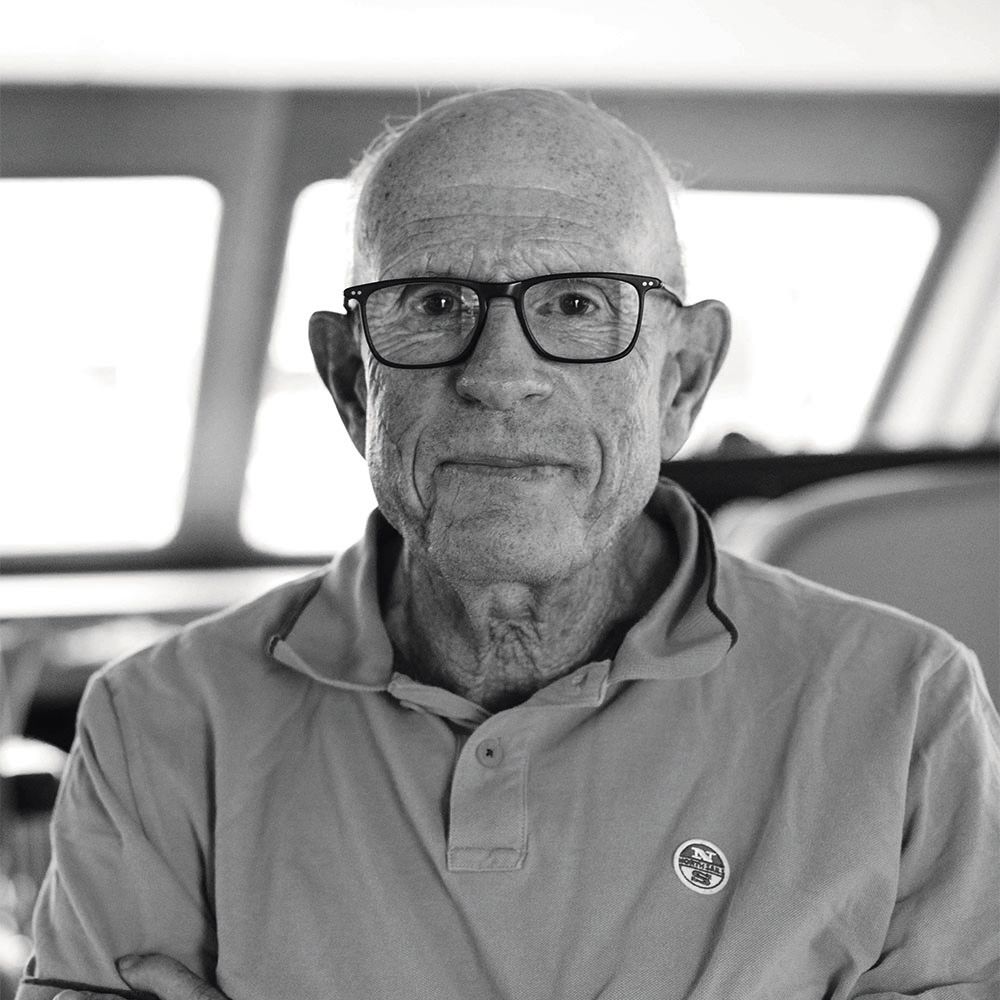
COURTESY OF NORTH SAILSWhidden has owned five yachts in his life and been part of eight America’s Cup campaigns
COURTESY OF NORTH SAILSWhidden has owned five yachts in his life and been part of eight America’s Cup campaigns
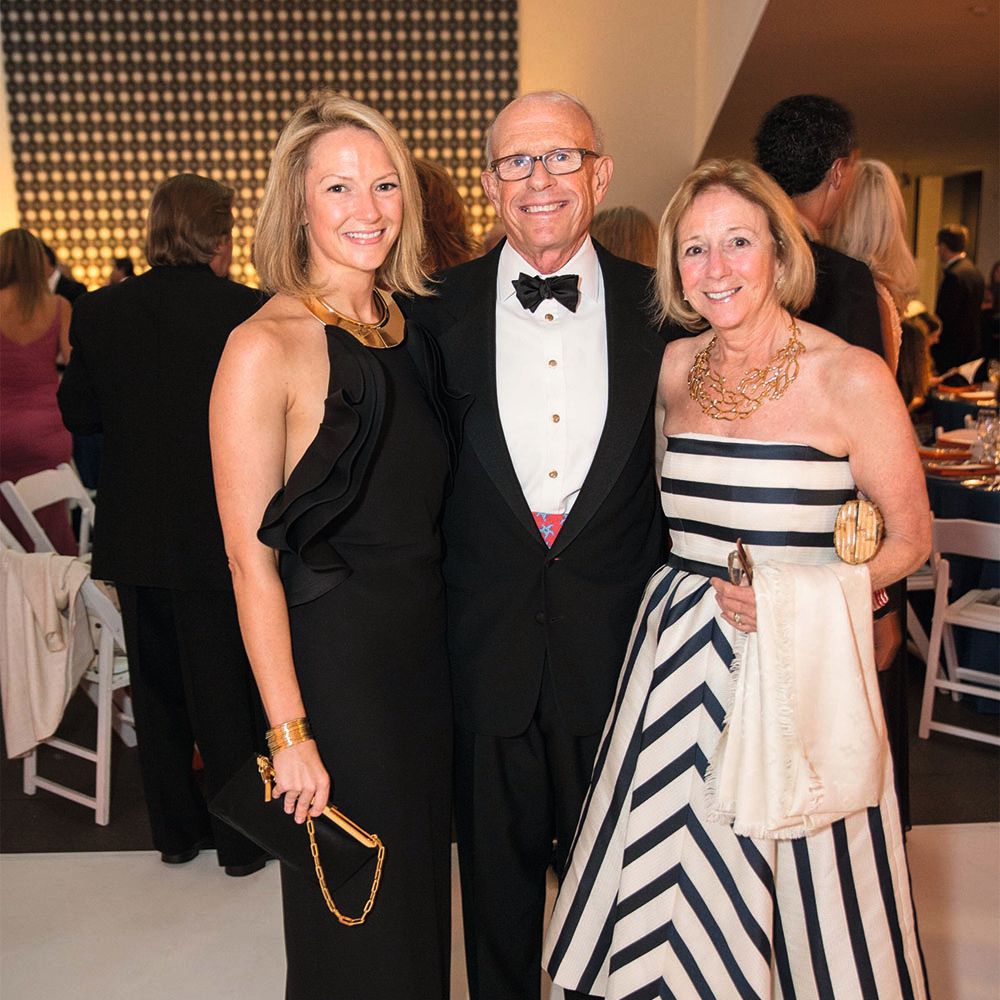
DREW ALTZIER PHOTOGRAPHYWith daughter Holly and wife Betsy
DREW ALTZIER PHOTOGRAPHYWith daughter Holly and wife Betsy

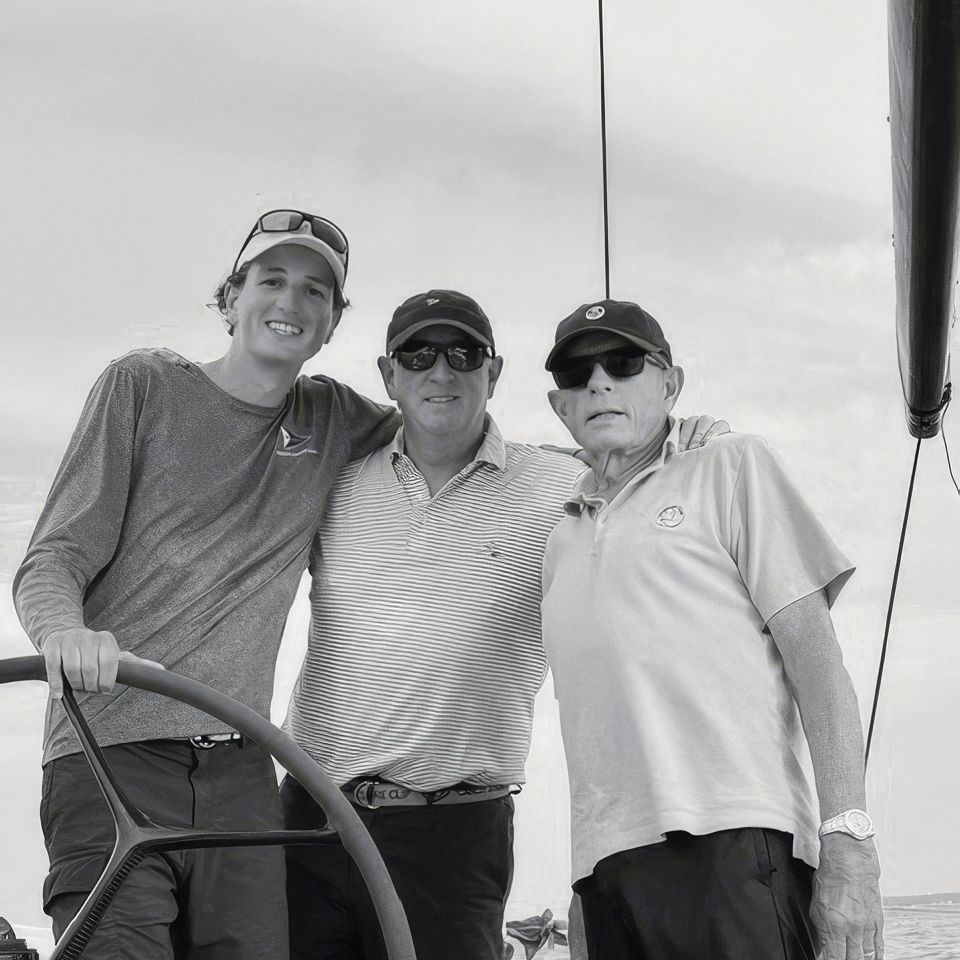
COURTESY OF OWNERWith son Avery and grandson Thomas, who won a sailing world championship at age 14
COURTESY OF OWNERWith son Avery and grandson Thomas, who won a sailing world championship at age 14
Whidden and his wife’s preferred cruising grounds are New England, with Chebeague Island, a former Native American fishing island in Maine’s Casco Bay, being one of their favourite spots. Portland, Camden, Rockport and Kennebunkport are other Maine spots on their itinerary, and the pair are also dedicated followers of the New York Yacht Club cruise.
“I don’t think my dad thought I’d amount to much being a sailmaker,” says Whidden, but, “I was a glutton for all that I could learn.” Whidden’s dedication to his passion has paid off handsomely – his decorated sailing career and his huge expansion of North Sails is a testament to that tenacity.
These days, the pace may be slower and the boats a touch more comfortable, but the joy remains the same: exploring quiet harbours with Betsy, revisiting favourite islands and finding new ones along the way. If these moments are the true measure of success, Tom Whidden is very much at the top of his game.
First published in the February 2026 issue of BOAT International. Get this magazine sent straight to your door, or subscribe and never miss an issue.
 Built with Shorthand