

PAST PARADISE
An epic trip to every UNESCO site in the Caribbean


Sailing yacht owner Edward Kane tells Georgia Boscawen about his journey to every cultural UNESCO World Heritage Site in the Caribbean
ADOBE STOCK
“There are infinite ways to enjoy a superyacht. Some owners choose to race, others prefer to sip cocktails in magnificent harbours, but many choose to explore, using their yacht as a tool to access the world’s splendours.
Edward Kane, owner of 32.1-metre sailing yacht Bolero, falls into this final category of intrepid travellers. Kane set forth on an epic journey to all the Caribbean’s cultural UNESCO World Heritage Sites, a specific itinerary on a grand scale to see some of man’s greatest feats, and he wants to inspire others to do the same. The Caribbean remains one of the most well-cruised destinations on the planet, attracting a vast proportion of the fleet every year, largely for its white sands and crystal-clear waters.
But a UNESCO itinerary with a cultural focus showcases a different side to the region, looking beyond the bays and beaches into the crumbling citadels and colonial cities that illustrate how Caribbean history unfolded.


But a UNESCO itinerary with a cultural focus showcases a different side to the region, looking beyond the bays and beaches into the crumbling citadels and colonial cities that illustrate how Caribbean history unfolded.


The region’s distinct cruisability, as well as the proximity and number of sites, make the Caribbean a good candidate for this UNESCO itinerary.
Another excellent summer option would be the Tyrrhenian Sea off Italy, which has 16 coastal cultural UNESCO World Heritage Sites (including Sicily) and influences from Greece, the Arab-Normans and the Etruscans.
“The Caribbean is probably the only place in the world where you can go from one culture to another, usually sailing in daylight”
But, perhaps surprisingly, it’s the Caribbean that has the most yacht-friendly and culturally diverse UNESCO sites, from the Spanish arrival in the late 15th century to French and English settlers and the infamous privateers in the 17th century. There are a total of 20 UNESCO World Heritage Sites in the Caribbean, of which 15 are cultural, and a further 38 on the tentative list under consideration.


But, perhaps surprisingly, it’s the Caribbean that has the most yacht-friendly and culturally diverse UNESCO sites, from the Spanish arrival in the late 15th century to French and English settlers and the infamous privateers in the 17th century.
Almost all the cultural sites can be visited by yacht. “[The Caribbean] is probably the only place in the world where you can go from one culture to another, usually sailing in daylight,” says Kane.
“In the time it takes to do a long day sail or at most one overnight, you can visit islands that are (or were) commandeered by the French, Dutch, Swedish, English, Danish, Spanish and Americans.”

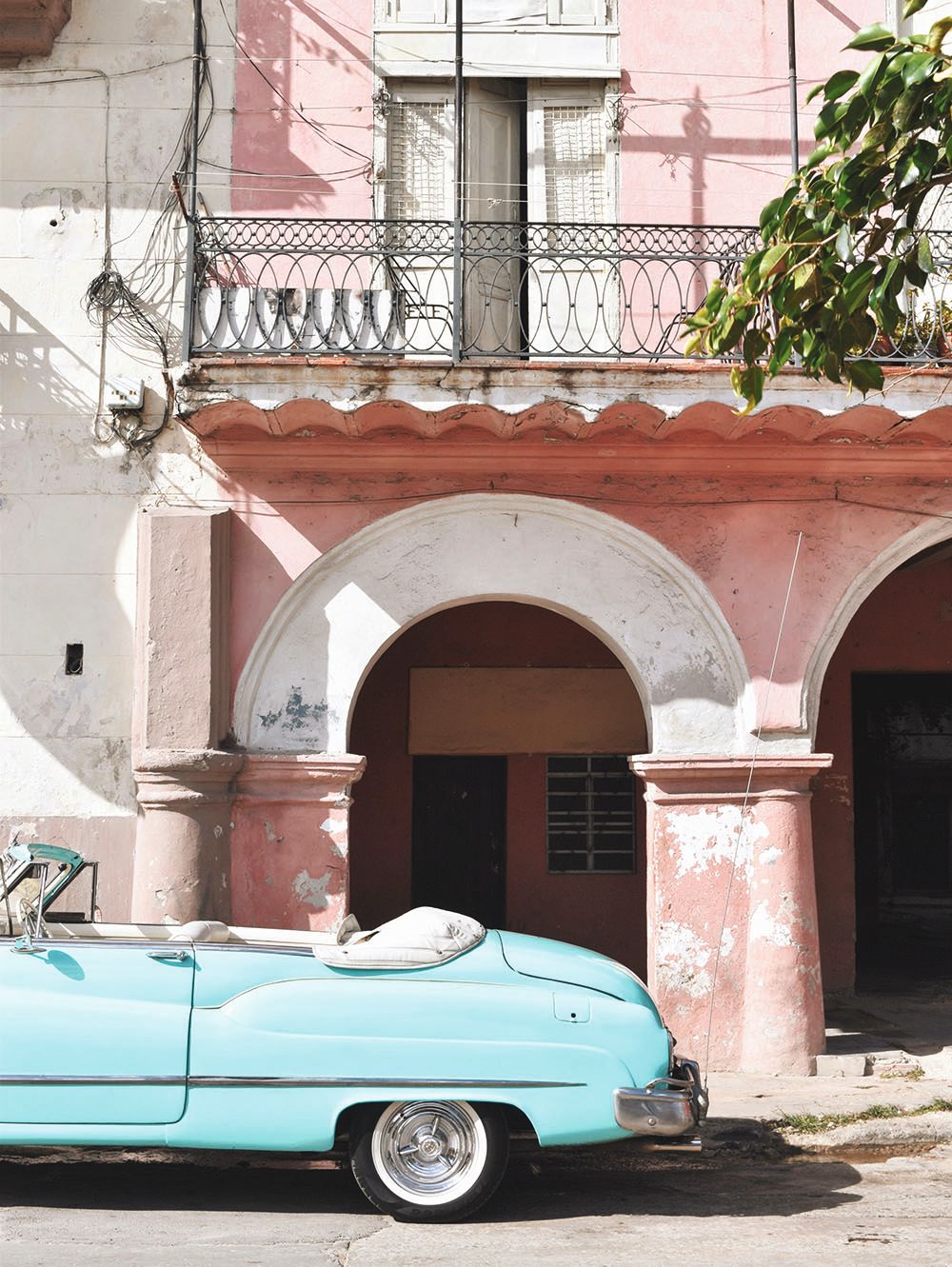
EMILY CRAWFORD ON UNSPLASH
EMILY CRAWFORD ON UNSPLASH
At the top of the list, with the most UNESCO sites, is Cuba. Lying 170 nautical miles from the southernmost tip of Florida, Cuba’s seven cultural UNESCO sites include Old Havana, Viñales Valley and San Pedro de la Roca Castle. While it comes with bureaucratic obstacles for visiting superyachts (which can be overcome), the splendour of Cuba outweighs the hurdles of getting there.
“The way all the buildings are crumbling [in Old Havana] is extraordinary,” says Kane. “You would walk down the street and literally the façades of buildings, the bricks and the mortar were disintegrating, and there’d be piles of rubble all the way down.”
There are a total of 20 UNESCO World Heritage Sites in the Caribbean, of which 15 are cultural, and a further 38 on the tentative list under consideration.
Almost all the cultural sites can be visited by yacht. “[The Caribbean] is probably the only place in the world where you can go from one culture to another, usually sailing in daylight,” says Kane.
“In the time it takes to do a long day sail or at most one overnight, you can visit islands that are (or were) commandeered by the French, Dutch, Swedish, English, Danish, Spanish and Americans.”
EMILY CRAWFORD ON UNSPLASH
EMILY CRAWFORD ON UNSPLASH
At the top of the list, with the most UNESCO sites, is Cuba. Lying 170 nautical miles from the southernmost tip of Florida, Cuba’s seven cultural UNESCO sites include Old Havana, Viñales Valley and San Pedro de la Roca Castle. While it comes with bureaucratic obstacles for visiting superyachts (which can be overcome), the splendour of Cuba outweighs the hurdles of getting there.
“The way all the buildings are crumbling [in Old Havana] is extraordinary,” says Kane. “You would walk down the street and literally the façades of buildings, the bricks and the mortar were disintegrating, and there’d be piles of rubble all the way down.”
A famously vibrant and busy city with colourful houses and vintage American cars, Old Havana is Cuba’s most famous UNESCO World Heritage Site, encompassing the fortification system and former city walls. During the 16th century, Havana became the largest port in the West Indies and in the 18th century, Fortaleza de San Carlos de la Cabaña, the largest fortress complex in the Americas, was built.
In practical terms, Kane explains that if you want to sail from Marina Hemingway (where most yachts dock), 50 nautical miles along the coast, it’s likely that you’d need to clear out of Havana customs and then go through the whole clearance process again in another city. “When I was there, they had the avian flu going on and the health inspectors made us hard boil all of our eggs because they didn’t want any risk.”


A famously vibrant and busy city with colourful houses and vintage American cars, Old Havana is Cuba’s most famous UNESCO World Heritage Site, encompassing the fortification system and former city walls. During the 16th century, Havana became the largest port in the West Indies and in the 18th century, Fortaleza de San Carlos de la Cabaña, the largest fortress complex in the Americas, was built.
In practical terms, Kane explains that if you want to sail from Marina Hemingway (where most yachts dock), 50 nautical miles along the coast, it’s likely that you’d need to clear out of Havana customs and then go through the whole clearance process again in another city. “When I was there, they had the avian flu going on and the health inspectors made us hard boil all of our eggs because they didn’t want any risk.”
Colonisation runs like scars through the landscapes – beautiful, sometimes harrowing and always culturally significant
From the UNESCO sites of Cuba, you can cruise over to Haiti (which shares an island with the Dominican Republic), 48 nautical miles east, which is home to the UNESCO World Heritage site of Citadel, Sans-Souci, Ramiers.
The citadels here serve as symbols of liberty, constructed by slaves who had gained their freedom. While the country is still recovering from a 2010 earthquake, these monuments remain intact and are an important stop before cruising along the northern coast and around the eastern tip of the Dominican Republic to the next site.
“The Colonial City of Santo Domingo represents perhaps the oldest site of European arrival in the New World and is said to have been visited by Christopher Columbus,” says Kane.
Its university, hospital and cathedral are among the oldest in the world. UNESCO says, “This colonial town, founded in 1498, was laid out on a grid pattern that became the model for almost all town planners in the New World.”
Kane notes there are also several marinas and docking facilities nearby including Marina Zarpar (up to 31 metres LOA) and Casa de Campo Marina (up to 76 metres LOA).


From the UNESCO sites of Cuba, you can cruise over to Haiti (which shares an island with the Dominican Republic), 48 nautical miles east, which is home to the UNESCO World Heritage site of Citadel, Sans-Souci, Ramiers. The citadels here serve as symbols of liberty, constructed by slaves who had gained their freedom.
While the country is still recovering from a 2010 earthquake, these monuments remain intact and are an important stop before cruising along the northern coast and around the eastern tip of the Dominican Republic to the next site.
“The Colonial City of Santo Domingo represents perhaps the oldest site of European arrival in the New World and is said to have been visited by Christopher Columbus,” says Kane.
Its university, hospital and cathedral are among the oldest in the world. UNESCO says, “This colonial town, founded in 1498, was laid out on a grid pattern that became the model for almost all town planners in the New World.” Kane notes there are also several marinas and docking facilities nearby including Marina Zarpar (up to 31 metres LOA) and Casa de Campo Marina (up to 76 metres LOA).
On his UNESCO quest, Kane didn’t want to bypass Grand Turk in the Turks and Caicos, which is currently on the list of sites under consideration. “It represents a different experience from forts and military installations,” he explains. “Rather, it illustrates an enormous commercial presence with an expansive salt farming infrastructure.”
Kane’s trip included the ruins of salt ponds, which are lined with rocks for evaporation of salt water. “I walked for a mile along the different works; you see the remnants of the old windmills and the old ponds that they use for salt evaporation.”


Kane’s most yacht-friendly UNESCO recommendation is Nelson’s Dockyard in Antigua. “It’s the easiest UNESCO World Heritage Site to visit by yacht as it’s within walking distance from either major docking facilities in Falmouth Harbour or the dockyard itself in English Harbour.”
Georgian naval buildings lie within a walled enclosure, which was constructed by the British Navy via the labour of enslaved Africans. The site was crucial to the development of the British Empire through trade and industrialisation. “This wonderful harbour provided the British with hurricane protection for a year-round presence in the Western Hemisphere,” says Kane.
It is also one of the few UNESCO cultural sites that superyachts can cruise right into. Just 56 nautical miles west of Nelson’s Dockyard, Brimstone Hill Fortress National Park on Saint Kitts is one of the finest and best-preserved examples of British fortress architecture in the Caribbean. Dig a little deeper and the perils of the 17th and 18th century are revealed here; the island was colonised by the French, who were later driven out by the British.
On his UNESCO quest, Kane didn’t want to bypass Grand Turk in the Turks and Caicos, which is currently on the list of sites under consideration. “It represents a different experience from forts and military installations,” he explains. “Rather, it illustrates an enormous commercial presence with an expansive salt farming infrastructure.”
Kane’s trip included the ruins of salt ponds, which are lined with rocks for evaporation of salt water. “I walked for a mile along the different works; you see the remnants of the old windmills and the old ponds that they use for salt evaporation.”
Kane’s most yacht-friendly UNESCO recommendation is Nelson’s Dockyard in Antigua. “It’s the easiest UNESCO World Heritage Site to visit by yacht as it’s within walking distance from either major docking facilities in Falmouth Harbour or the dockyard itself in English Harbour.”
Georgian naval buildings lie within a walled enclosure, which was constructed by the British Navy via the labour of enslaved Africans. The site was crucial to the development of the British Empire through trade and industrialisation. “This wonderful harbour provided the British with hurricane protection for a year-round presence in the Western Hemisphere,” says Kane.
It is also one of the few UNESCO cultural sites that superyachts can cruise right into. Just 56 nautical miles west of Nelson’s Dockyard, Brimstone Hill Fortress National Park on Saint Kitts is one of the finest and best-preserved examples of British fortress architecture in the Caribbean.
Dig a little deeper and the perils of the 17th and 18th century are revealed here; the island was colonised by the French, who were later driven out by the British.
Slave labour was used for the completion of the fortress during times of European colonial expansion in the Caribbean. UNESCO describes Brimstone Hill Fortress as “a remarkable example of European military engineering dating from the 17th and 18th centuries in a Caribbean context”.
The fortress was built to protect the coastline from sea attack and provide refuge for the island’s citizens on top of the steep volcanic hill. “Excellent tours are given and the views from the fort are spectacular,” adds Kane. The nearest marina here for visiting superyachts is in Basseterre for yachts up to 70 metres.


Barbados is the most remote location on Kane’s itinerary, but worth a visit. “It’s too windward of the island chain to allow for north-south sailing on a beam reach, but from a UNESCO World Heritage Site point of view, is well worth the effort.”
The Historic Bridgetown and its Garrison is a fine example of British colonial architecture, with a well-preserved old town. “The site includes the street grid in Bridgetown as well as the military barracks in the area known as the Garrison,” explains Kane. “Options for yachts are anchoring in Carlisle Bay as well as a wonderful new marina in Port St Charles.”


ADOBE STOCK
ADOBE STOCK

ADOBE STOCK
ADOBE STOCK


DUKAS - UNIVERSAL IMAGE GROUP VIA GETTY IMAGES
DUKAS - UNIVERSAL IMAGE GROUP VIA GETTY IMAGES


GETTY IMAGES
GETTY IMAGES
Left to right: Santo Domingo in the Dominican Republic; Citadel, Sans-Souci, Ramiers in Haiti; Palacio de Valle is in the Historic Centre of Cienfuegos; Willemstad in Curaçao, whose Dutch Colonial roots earned it a spot on UNESCO’s list
For even further-flung UNESCO adventures, Willemstad in Curaçao is an important example of the Dutch presence in this region. “Willemstad may be the best example of how significant the Dutch trading empire was in the 1600s,” Kane says.
The Caribbean has and will always be a popular yachting destination. Aimless cruising here is fabulous but the region doesn’t reveal its history easily. You may have cruised the area 50 times over and missed the stories that UNESCO sites reveal.
American and European colonisation runs like scars through the landscapes here – beautiful, sometimes harrowing and always culturally significant. “For sailors who might seek more intellectual stimulation as they travel throughout the Caribbean paradise, this itinerary will be rewarding,” concludes Kane. It will take some time to tick off the entire list. But judging by Kane’s enthusiasm, it’ll be well worth it.

ADOBE STOCKNelson’s Dockyard in Antigua
ADOBE STOCKNelson’s Dockyard in Antigua
Slave labour was used for the completion of the fortress during times of European colonial expansion in the Caribbean. UNESCO describes Brimstone Hill Fortress as “a remarkable example of European military engineering dating from the 17th and 18th centuries in a Caribbean context”.
The fortress was built to protect the coastline from sea attack and provide refuge for the island’s citizens on top of the steep volcanic hill. “Excellent tours are given and the views from the fort are spectacular,” adds Kane. The nearest marina here for visiting superyachts is in Basseterre for yachts up to 70 metres.
Barbados is the most remote location on Kane’s itinerary, but worth a visit. “It’s too windward of the island chain to allow for north-south sailing on a beam reach, but from a UNESCO World Heritage Site point of view, is well worth the effort.”


The Historic Bridgetown and its Garrison is a fine example of British colonial architecture, with a well-preserved old town. “The site includes the street grid in Bridgetown as well as the military barracks in the area known as the Garrison,” explains Kane. “Options for yachts are anchoring in Carlisle Bay as well as a wonderful new marina in Port St Charles.”
ADOBE STOCK
ADOBE STOCK
ADOBE STOCK
ADOBE STOCK
DUKAS - UNIVERSAL IMAGE GROUP VIA GETTY IMAGES
DUKAS - UNIVERSAL IMAGE GROUP VIA GETTY IMAGES
Left to right: Santo Domingo in the Dominican Republic; Citadel, Sans-Souci, Ramiers in Haiti; Palacio de Valle is in the Historic Centre of Cienfuegos
For even further-flung UNESCO adventures, Willemstad in Curaçao is an important example of the Dutch presence in this region. “Willemstad may be the best example of how significant the Dutch trading empire was in the 1600s,” Kane says.
The Caribbean has and will always be a popular yachting destination. Aimless cruising here is fabulous but the region doesn’t reveal its history easily. You may have cruised the area 50 times over and missed the stories that UNESCO sites reveal. American and European colonisation runs like scars through the landscapes here – beautiful, sometimes harrowing and always culturally significant.
“For sailors who might seek more intellectual stimulation as they travel throughout the Caribbean paradise, this itinerary will be rewarding,” concludes Kane. It will take some time to tick off the entire list. But judging by Kane’s enthusiasm, it’ll be well worth it.
First published in the November 2024 issue of BOAT International. Get this magazine sent straight to your door, or subscribe and never miss an issue.
 Built with Shorthand