

LA DOLCE VOLUME
138 The widebody Ferretti Yachts 940 ramps up the volume


The new Ferretti Yachts 940 takes a popular trend in yacht design and makes it all its own, Katia Damborsky finds
More volume, same length. In yachting, that’s called the space race, and it describes the increased push for yacht builders and designers to create products with big-boat hallmarks in a more compact package. It means the owners get more space for their buck while not nudging up the LOA too much, which is handy as it keeps yachts below certain class-regulated requirements.

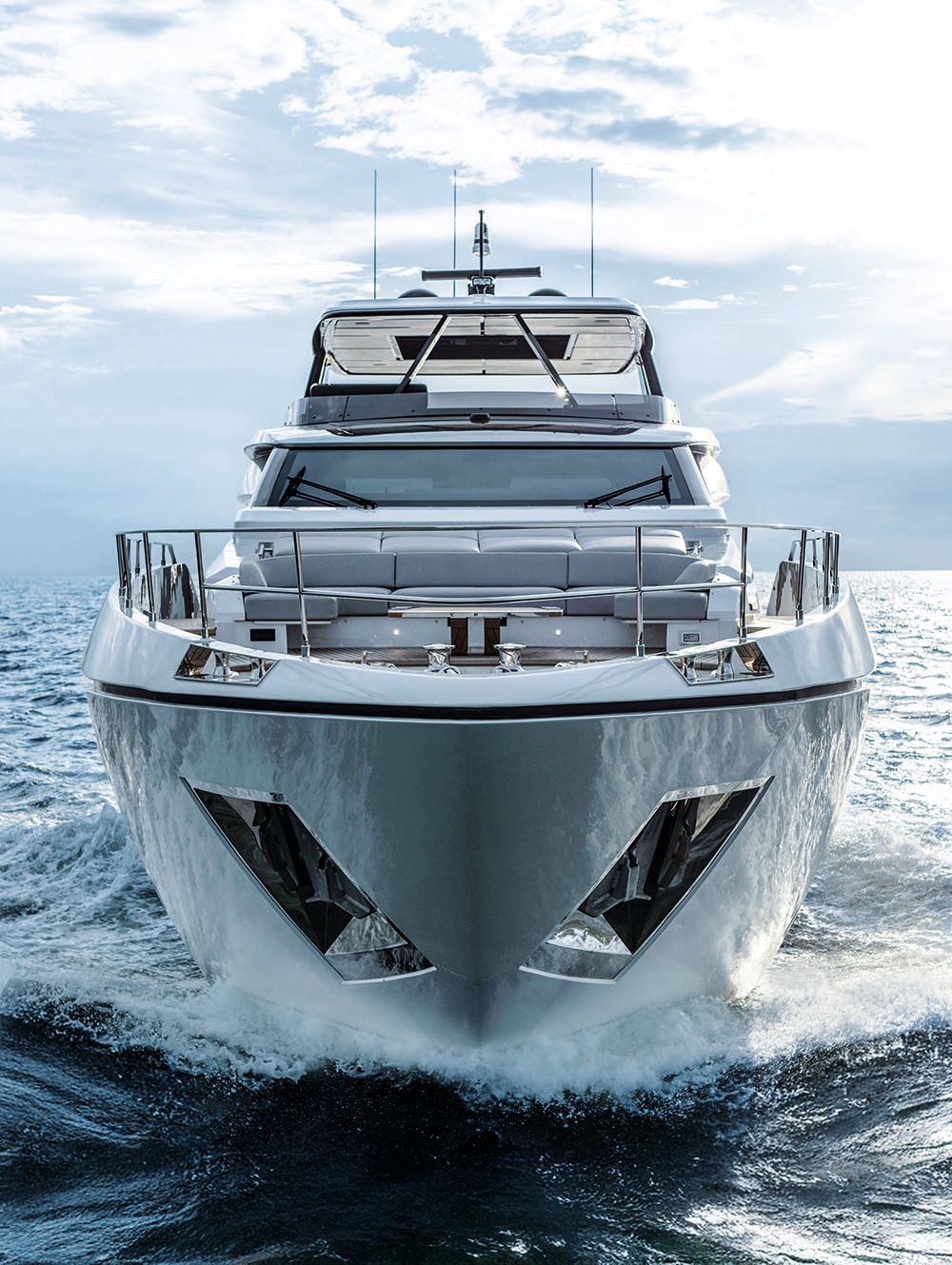
Designed by Filippo Salvetti, the widebody arrangement gives extra room in the bow for the main-deck owner’s cabin || MAURIZIO PARADISI
Designed by Filippo Salvetti, the widebody arrangement gives extra room in the bow for the main-deck owner’s cabin || MAURIZIO PARADISI
Almost no yacht builder has been immune to the trend, and it’s led to a surge of yachts that pump up the gross tonnage at the risk of creating a slightly boxy look. For Ferretti Yachts, this approach to design just wouldn’t jibe with its Italian sensibilities for elegance and style. But the brand wanted to develop a new flybridge model with a widebody design nonetheless. Enter the new Ferretti Yachts 940.
“Added volume does not necessarily result in a massive, heavy yacht”


A widebody, if well-proportioned, is not a limitation but rather an opportunity to give the project greater dynamism and character,” says the yacht’s exterior designer, Filippo Salvetti, when I ask him if it’s difficult to keep a widebody boat from looking chunky.
While amping up the comfort and space, the yacht was able to keep her “dynamic spirit”
Added volume, he says, “does not necessarily result in a massive, heavy yacht. It all depends on proportions.” Like many yacht trends, the style was introduced in response to market demands. Alessandro Tirelli, chief sales officer of serial business at Ferretti Group, believes that clients aren’t as willing to make compromises when it comes to onboard volumes anymore.
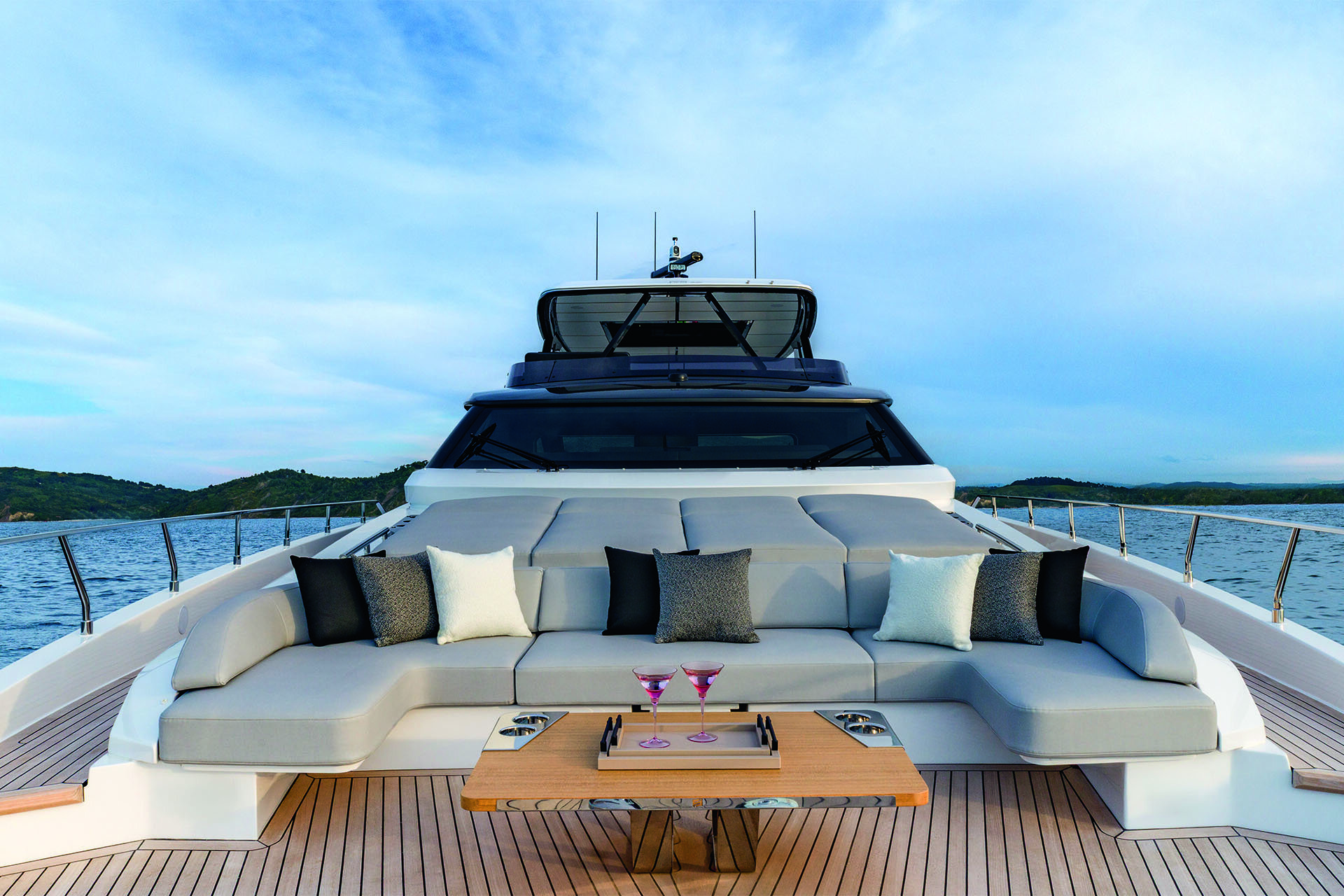
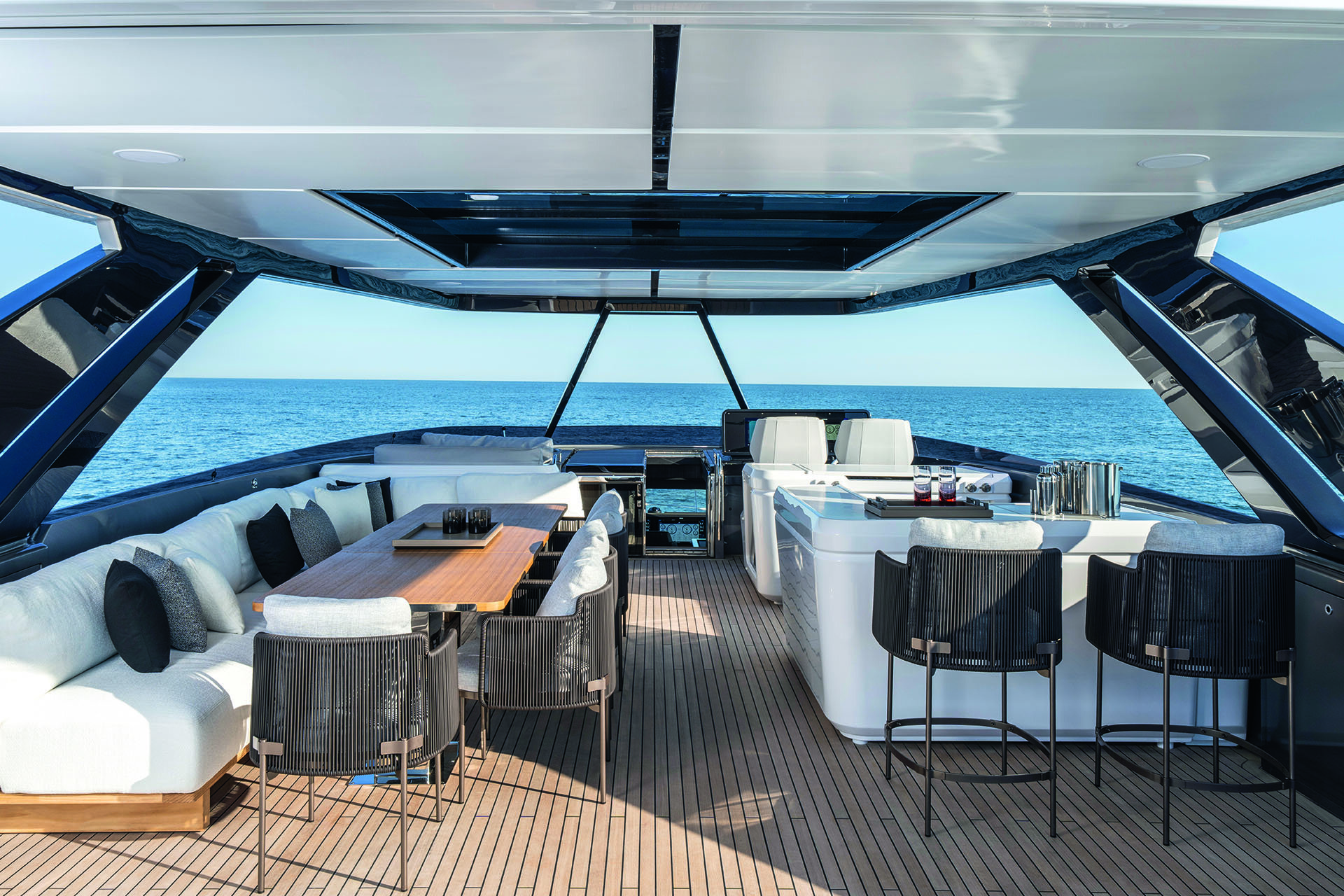
“The widebody design was a key part of [our] vision,” he explains. “It allowed us to significantly expand the main deck interior volume, especially in the master suite, without compromising the yacht’s balance or performance.” While amping up the comfort and space, the yacht was able to keep her “dynamic spirit”, according to Tirelli.
I’m visiting the yacht in Venice, where Ferretti Yachts is showing off the model to the market for the first time. Salvetti and his studio have been working with Ferretti Yachts for almost a decade. His lines are an elegant homage to that partnership, with the same basic shapes from those earlier models repeated here, such as the cut-away gunwale on the main deck, the contrasting colour on the line that carves out the wheelhouse and the dynamic angle to the fashion plates.
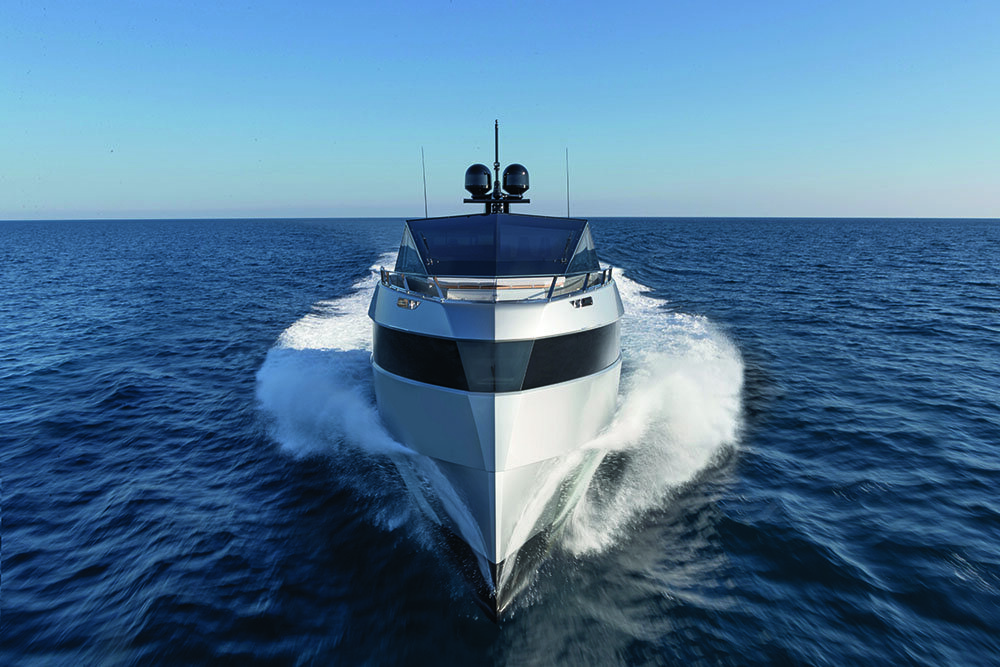
The 940 slots tidily into Ferretti Yachts’ existing flybridge range, offering a slightly sexier and sportier alternative to the 30.1-metre Ferretti Yachts 1000 or 1000 Skydeck


There’s a sporty appeal to the yacht’s silhouette that draws the eye. Salvetti describes the exterior as having a contemporary touch created by “the treatment of the surfaces”, which he calls “sculpted and taut”. He points to the upper deck bulwark as “simple in form but free of additional stylistic elements [that would interrupt] the glazing” and the line that frames the helm area as “a distinctive detail, a dynamic stroke that lends tension and elegance to the hull”.
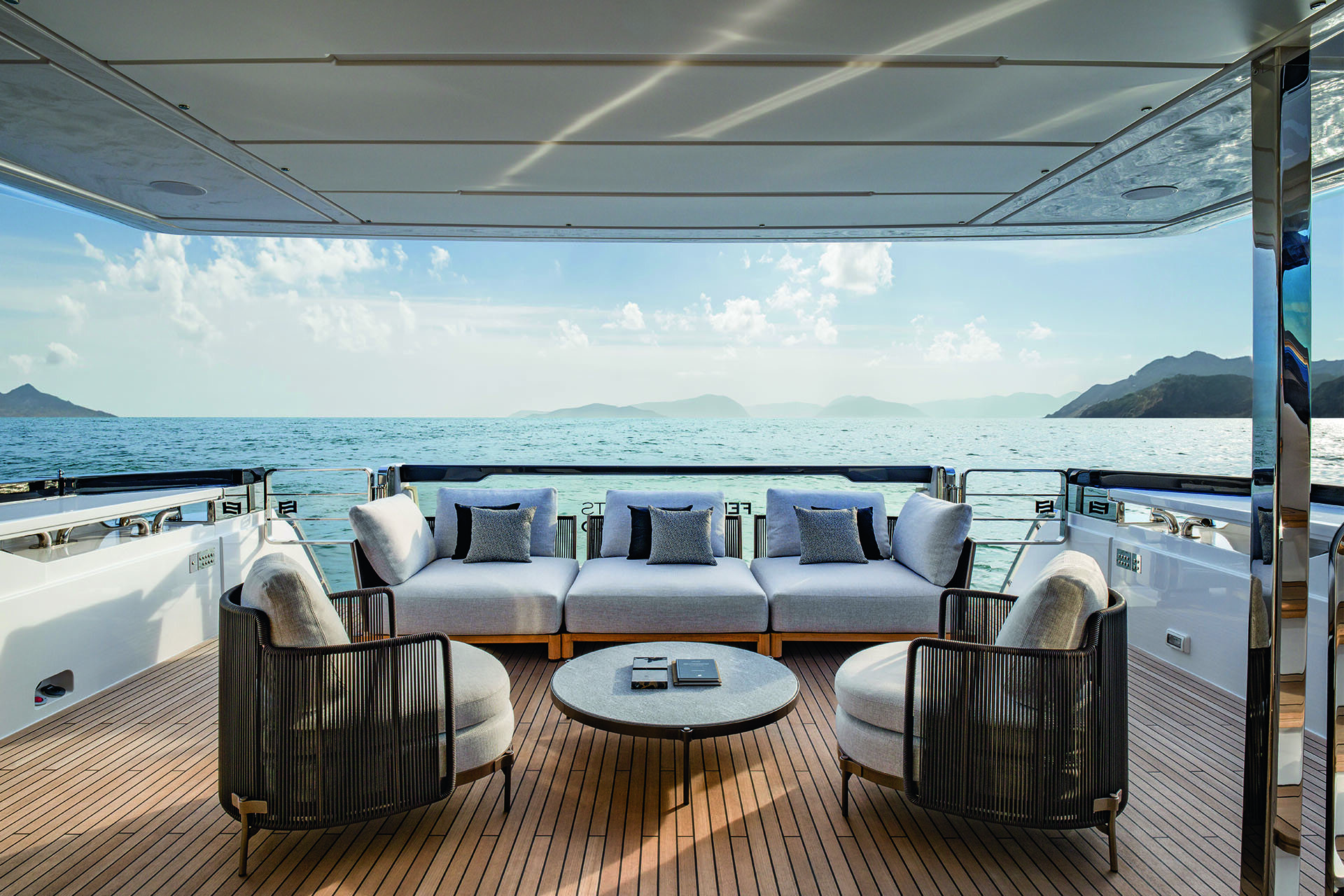
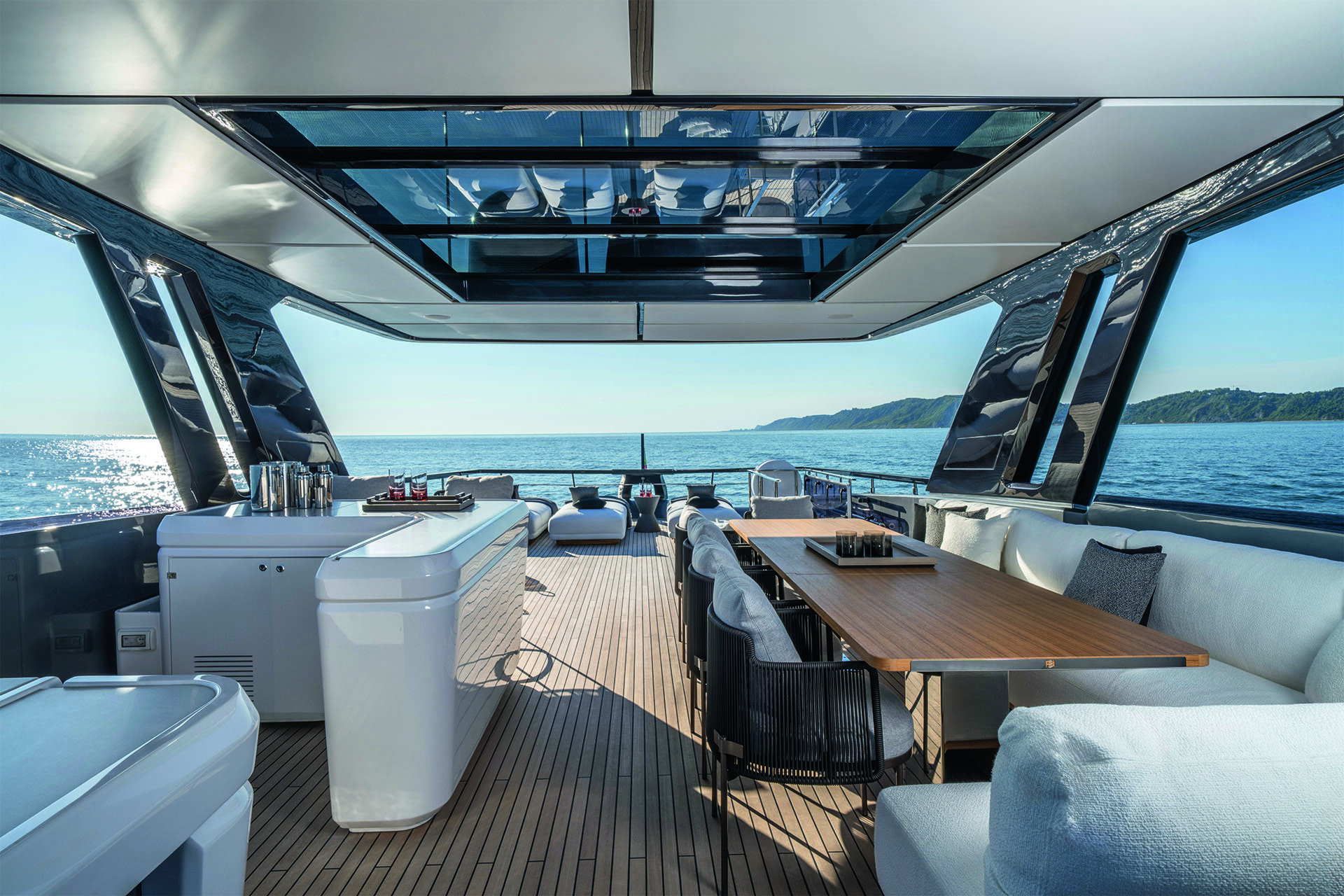
Trademark Italian style is evident throughout, as seen in the glass panels bordering the cockpit, the louvre slats on the flybridge overhead and the loose furniture by Talenti and Minotti that complements IdeaeItalia’s minimalist yet warm interior.
Two owners quickly found their homes in the 940, and both clients were already a part of the Ferretti Group family (a group that comprises seven brands), something that CEO Alberto Galassi says is a common occurrence. “Forty-four per cent of our sales are cross-selling among brands,” he confirms. For him, the charm of the 940 is the swathe of glass that draws in light on the main deck.
“The use of glass was the starting point of our project,” notes Salvetti. “The focus was on creating a continuous, full-height window that would open the saloon to the outside in a direct dialogue with the sea. It was precisely this design constraint – keeping the saloon area fully glazed up to the helm station, from floor to ceiling – that generated the form and style of the superstructure, giving rise to the new design language.”


A low-profile Minotti sofa doesn’t impede the views out of the full-height glass that frames the main saloon’s lounging and dining areas || MAURIZIO PARADISI
A low-profile Minotti sofa doesn’t impede the views out of the full-height glass that frames the main saloon’s lounging and dining areas || MAURIZIO PARADISI


Glass was a key ingredient in the design, and the effect is pretty spectacular: stepping into the saloon, light dances across the warm parquet flooring, the L-shaped Minotti sofa and the glass-topped dining table by Italian design firm Bonaldo.
One of the 940's biggest design evolutions is the use of curves
The furniture is deliberately low-slung, allowing the full-height glass windows and the views to become the focal point. On the starboard side, a sliding glass door opens to allow easy access to the side deck. The aft part of the saloon is dedicated to relaxing, while forward hosts dining for eight, with grey suede chairs supplied by Cassina and an inky-veined marble slab acting as a backdrop to the set-up.


Bonaldo’s glass-topped Art table is paired with Cassina’s Hola chairs in suede || MAURIZIO PARADISI
Bonaldo’s glass-topped Art table is paired with Cassina’s Hola chairs in suede || MAURIZIO PARADISI

|| MAURIZIO PARADISI
|| MAURIZIO PARADISI
La Spezia-based studio IdeaeItalia has crafted the interiors, with two “moods” available: Contemporary and Home. Hull No 1 features the Home palette, revolving around warm hues and touches of colour that are evident in the marmalade-toned soft furnishings and the amber hue that has snaked into some of the marble in the main deck owner’s cabin.
“The widebody design allowed us to significantly expand the main deck interior volume”
The prescribed palettes work well for Ferretti Yachts’ business model, letting clients switch off from getting too mired in decisions and allowing someone else to take care of the decor and layout. Tweaks can be made to the 940, of course, but the GRP construction means that most of the structures are pre-determined, and any client-requested changes typically affect only the fixed and loose furniture.
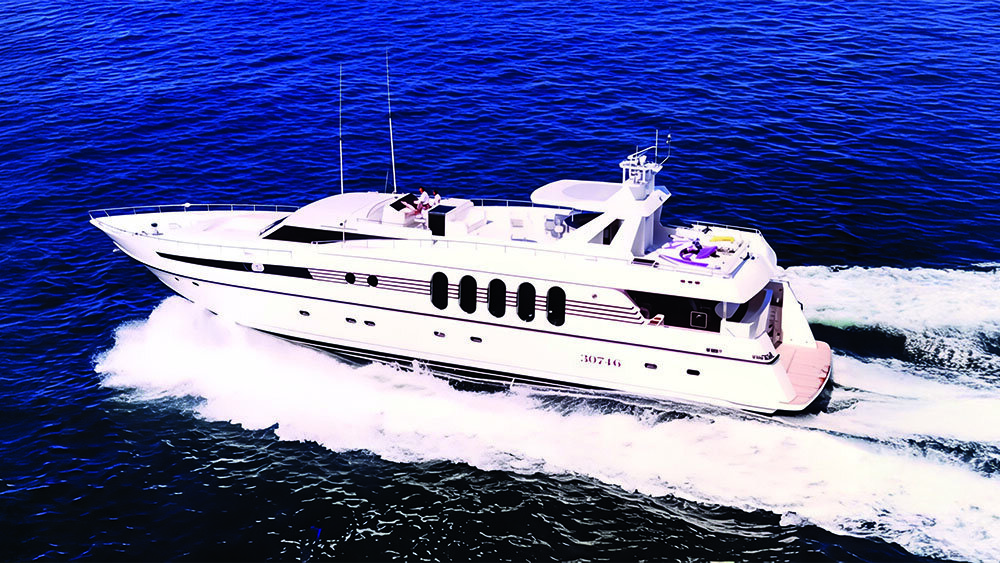 In 1993, Taiwanese shipyard Monte Fino pioneered a widebody design for its new Monte Fino 90. In a market that was saturated with slender sports yachts, the 27-metre model focused on space with 168GT of volume. Other ahead-of-its-time qualities were a generous swim platform and large oval hull windows.
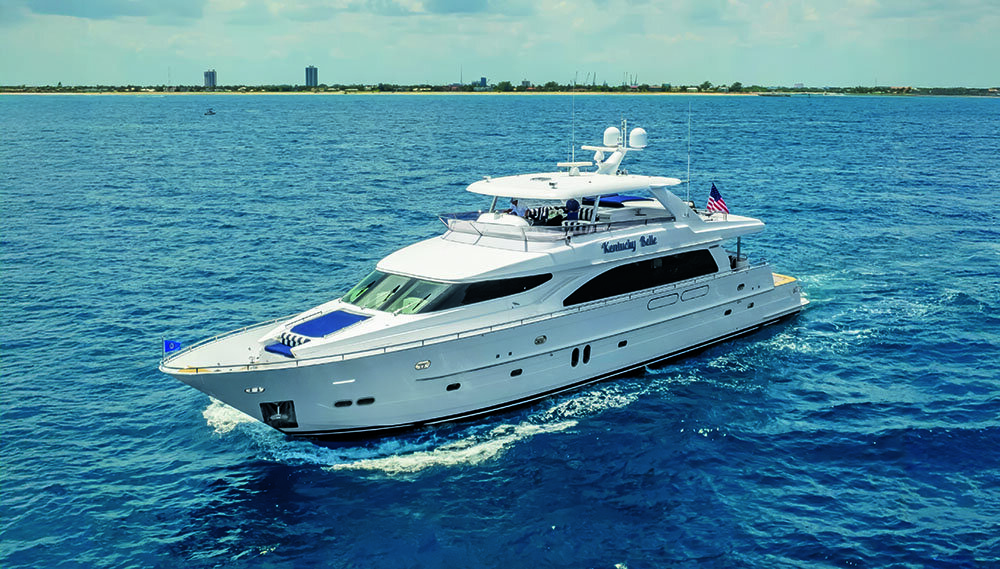 In 2005, fellow Taiwanese shipyard Horizon entered the game with a widebody design that remains enduringly popular on the brokerage market. The 28-metre model’s elegant profile penned by John Lindblom masks her big beam and substantial volume under a pane of glazing that makes her appear long and lean.
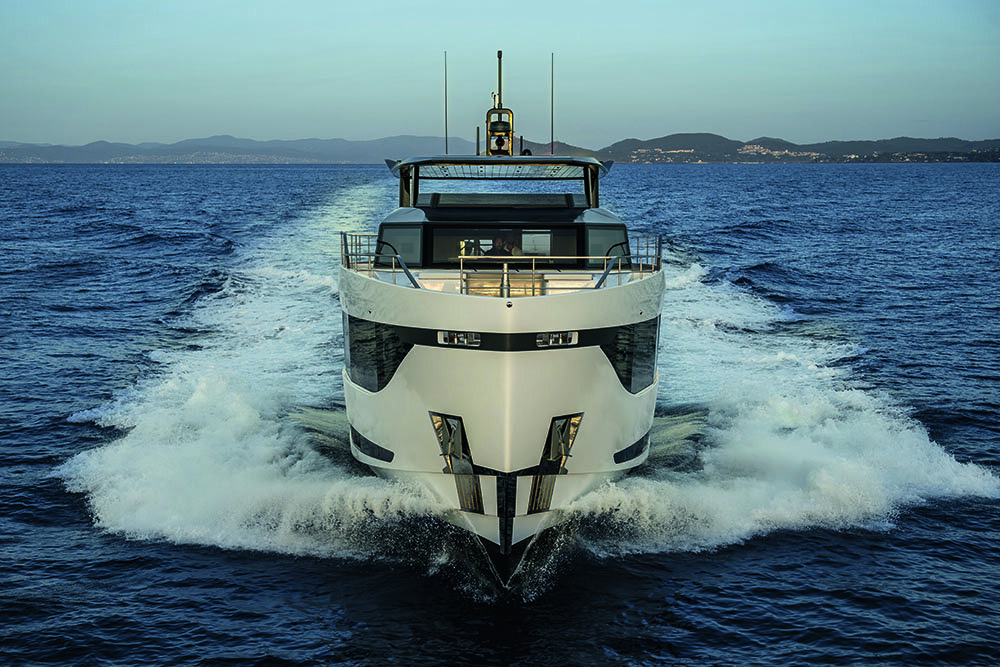
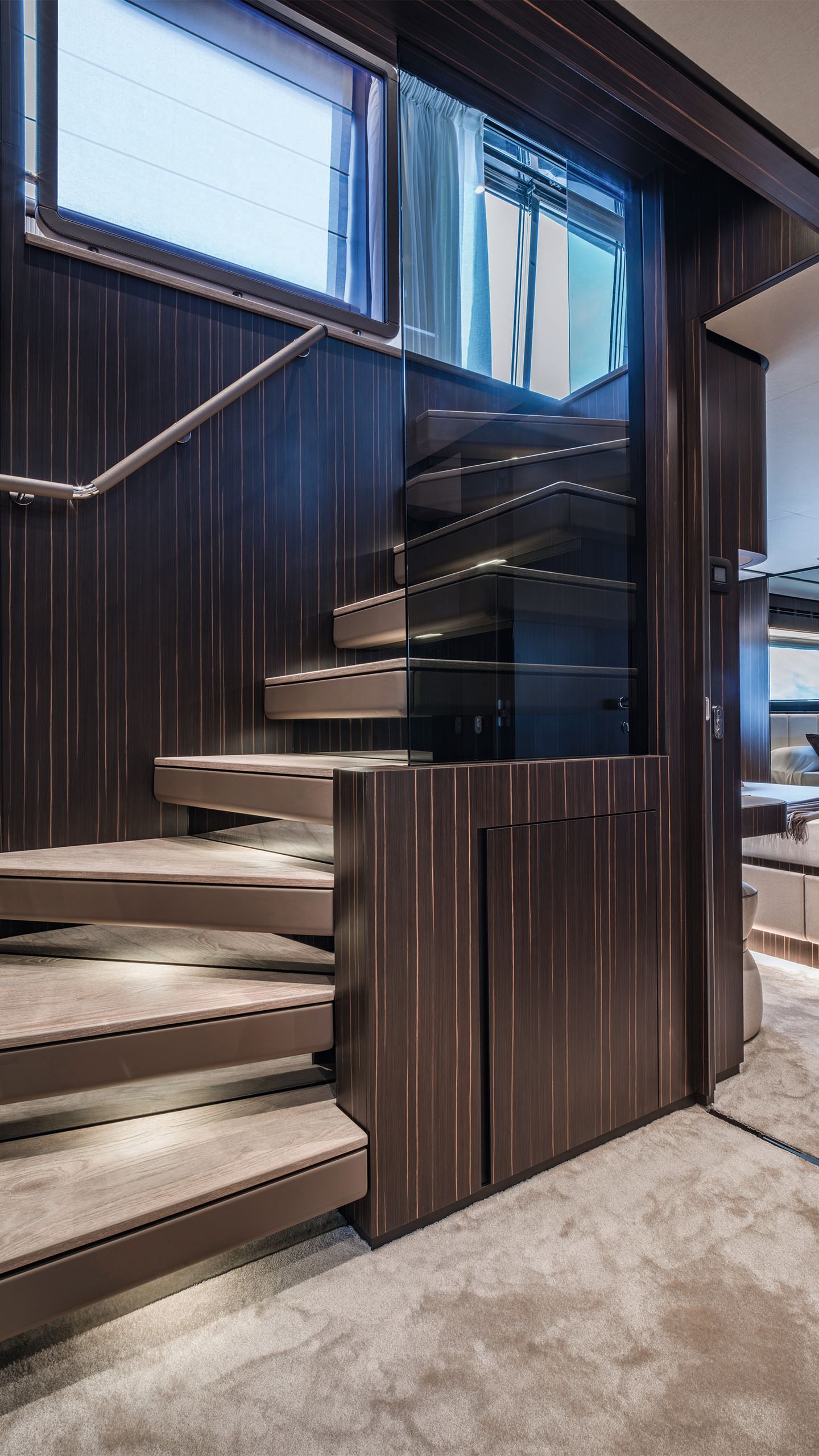
One of the 940’s biggest design evolutions is the use of curves. IdeaeItalia has introduced more fluid motion into the cabins, which you can see in the storage compartments and desks that have a moulded look and feel.
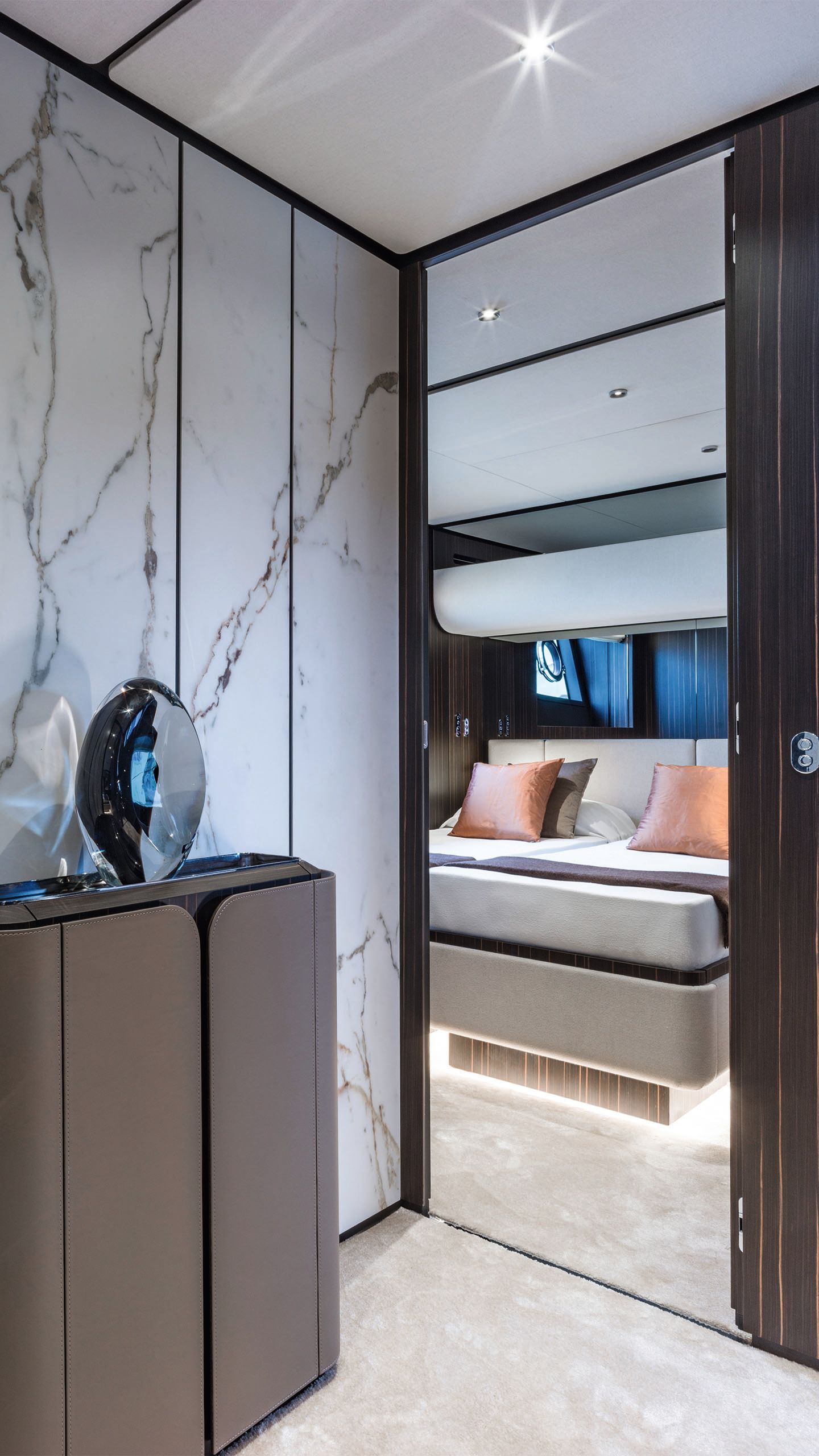
In the owner’s cabin, a free-standing, kidney-shaped vanity is topped by silver roots marble, and its curving shape is mimicked in the rounded edges of the leather headboard panels. Tirelli describes it as a “well-organised” environment, with a television screen integrated into the mirror forward of the berth and a walk-in wardrobe flanking the set of two steps that leads into the cabin.

|| MAURIZIO PARADISI
|| MAURIZIO PARADISI
|| MAURIZIO PARADISI
|| MAURIZIO PARADISI
|| MAURIZIO PARADISI
|| MAURIZIO PARADISI
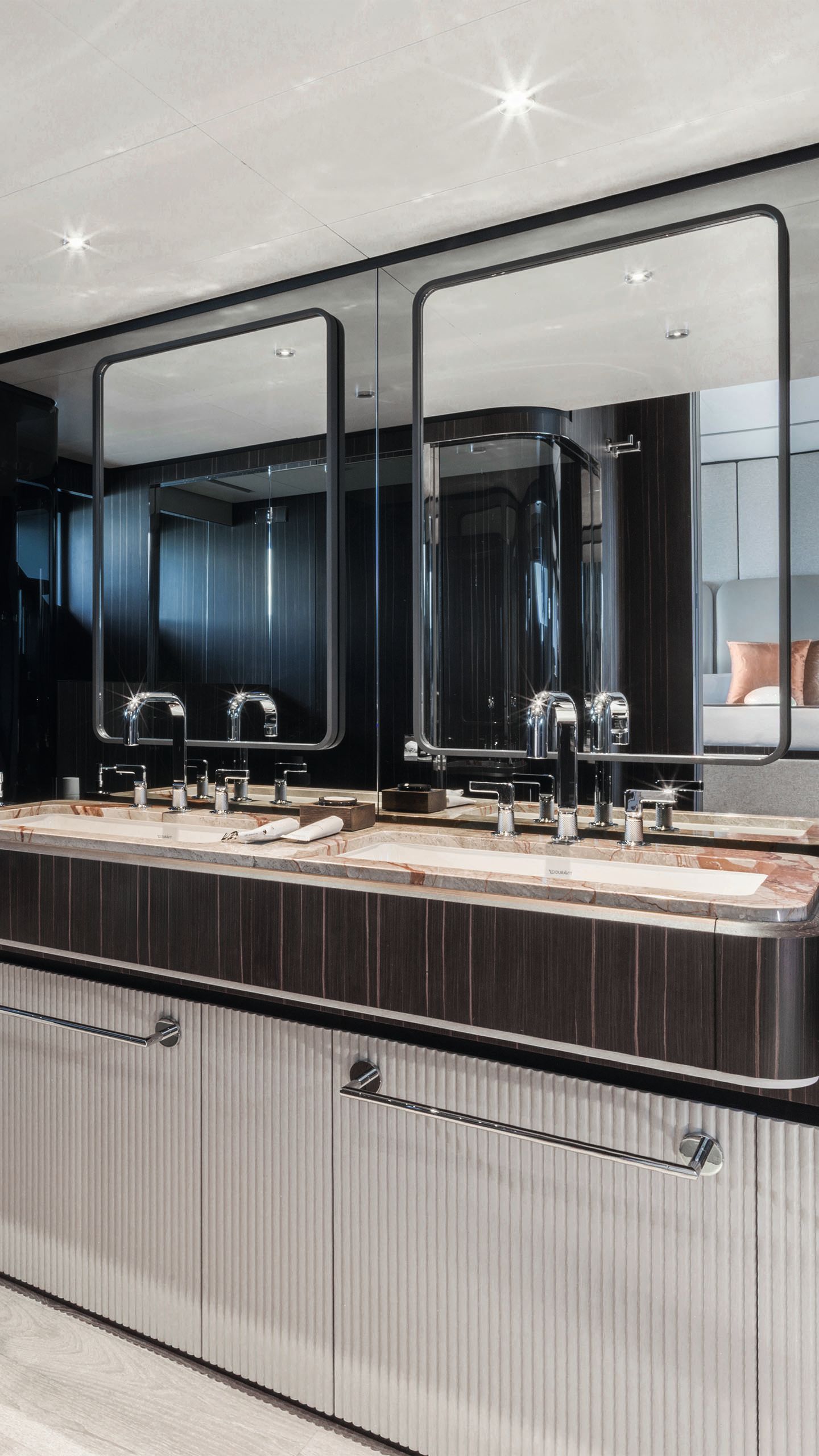
The step-down access adds extra head height to the owner’s cabin and the en suite forward has a surprising, yet refreshingly retro vibe that’s achieved with a stained wood-style veneer, oblong mirrors and ribbed white panelling over the storage.
What’s not immediately evident when looking at the yacht is its commitment to comfort and safety. The vessel has CE Class A certification, which Tirelli says “indicates the highest level of safety standards for recreational boats” and “signifies that the yacht is designed and built for extended offshore voyages in which wind force may exceed eight on the Beaufort scale with waves of four to six metres.”
The new 940 slots tidily into Ferretti Yachts’ existing Flybridge range, offering a slightly sexier and sportier alternative to the 30.1-metre Ferretti Yachts 1000 or 1000 Skydeck (although both of those were also designed by Filippo Salvetti).
Interestingly, the 940 is more closely related to the 860 in terms of exterior styling, but the 940 affords an entire additional cabin to give clients the much sought-after five-cabin configuration. However, in spite of this extra area, the 940 somehow manages to look as elegant as its smaller sister – traditional, even.

|| MAURIZIO PARADISI
|| MAURIZIO PARADISI
“I don’t believe simplicity should be confused with tradition,” counters Salvetti. “The simplicity of lines does not equate to classicism. Rather, it is the hallmark of a contemporary style.” He believes that the best designs can be “projected” into the future and still appear timeless.
“Just think of most cars that have made history and are still considered current, admired and sought-after today: they are not complex, but thanks to their proportions and a few innovative details, they immediately become contemporary and remain so for decades,” he says.
In that case, it’s no coincidence that the first owners have described the 940 as “futuristic”. Call it traditional, call it modern or call it futuristic, the fact is, great yacht design doesn’t pay too much attention to what year it is.
First published in the May 2026 issue of BOAT International. Get this magazine sent straight to your door, or subscribe and never miss an issue.


A second helm station up top turns the sundeck into a true flybridge
Situated two steps down on the main deck, the owner's cabin gains extra headroom
A single-piece windscreen in the raised pilothouse gives the captain great visibility
The saloon offers almost 30m2 of space
Three crew are housed in two cabins in the bow
Three of the guest cabins are deemed to be VIPs
LOA 28.97m | Freshwater capacity 1,320 litres |
LWL 22.38m | Tender (optional) Williams Jet tender |
Beam 6.76m | Owners/guests 10 |
Draught 2.3m | Crew 3 |
Displacement (laden) 98 tonnes | Construction GRP |
Engines (standard) MAN V12 2000 | Classification CE A; RINA B + F + A1 (SOUND EMISSION) |
Generators (standard) 1 X 27KW ONAN; 1 X 19KW ONAN | Naval architecture Ferretti Group engineering department |
Stabilisers Hydrotab | Exterior design Filipo Salvetti Design |
Speed (max/cruise) 25/21 knots | interior design IdeaeItalia |
Range at 21 knots 320 nm | Builder/Year Ferretti Yachts/ 2025 |
Fuel capacity 9,000 litres |
 Built with Shorthand