

BLACK BEAUTY
Why Vitters' ketch Maximus is a wolf in sheep's clothing

Don’t let the classic profile fool you – below the waterline Maximus is a modern thoroughbred ready to gallop over the finish line. Risa Merl saddles up
Looking at her glossy black hull and traditional styling, you’d be forgiven for thinking the 59-metre Vitters yacht Maximus is an iteration of her owner’s previous vessel, the 54.6-metre Marie. Delivered 13 years after Marie, there is much more than the passing of time – and 4.4 metres of LOA – that separates these two vessels.
“Marie and Maximus share the same colour scheme and interior style but, from a design point of view, they are totally different boats,” says Bas Peute, sales and marketing manager at Vitters Shipyard.
He rattles off the differences – Marie has a fixed keel, Maximus a lifting keel; Marie has a narrow stern, Maximus is wider; Maximus has two rudders to Marie’s one, and Marie is a classic ketch, while Maximus is a performance ketch.
But something these blackhulled beauties have in common is they both cut a lovely form on the water. Kept private since her delivery in 2023, Maximus is currently for sale with Edmiston while also being offered for charter via Burgess, affording prying eyes the chance to finally get a look on board.
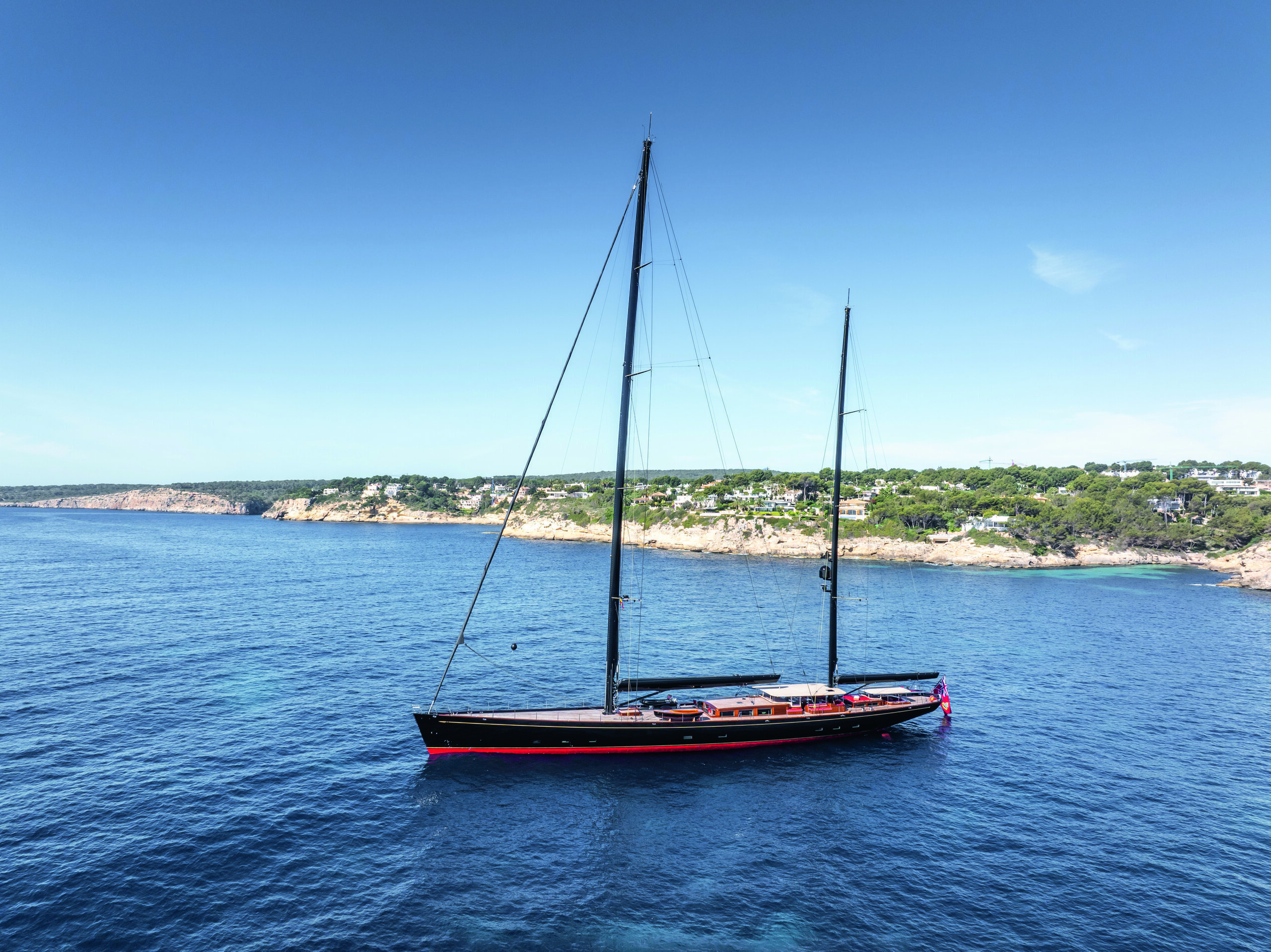
A prime example of classic meets modern, Maximus melds traditional deckhouses and styling with optimised decks, laid out to be as clean as possible during racing
As Peute explains, Marie was, in fact, conceived as an optimised version of Adele, a Hoek-designed yacht launched by Vitters in 2005, and as such, Hoek was called on to create Marie. The inspiration for Maximus, however, came from the 42-metre ketch Rebecca, designed by Germán Frers and delivered by Pendennis in 1999. “The owner’s brief was ‘build me a fast and large Rebecca’ – arguably one of the most beautiful ketches on the water,” says Peute.
Fittingly, they put together the same team that built Rebecca – with design by Germán Frers, founder of Frers Naval Architecture & Engineering, and project management by owner’s rep Jon Barrett. “The owner really loved the beauty of Rebecca and appreciated her performance,” says Barrett.
With Frers’ exterior styling, Maximus is reminiscent of Rebecca in the angle of the stem, a fine entry forward, classic low-profile deck structures and the elegance of the sheer line, which varies according to the length overall and deck curvature.
“The owner’s brief was ‘build me a fast and large Rebecca,’ arguably one of the most beautiful ketches on the water

“Frers has often said Rebecca was one of the most beautiful designs he ever did, but with Maximus the goal was to enhance performance for this larger yacht,” says Barrett. This pursuit of performance led to a lifting keel, fuller hull sections aft and a larger mizzen mast to increase power and balance.
These developments were supported by extensive CFD analysis that compared the performance to an official ORC speed prediction programme. “The canoe body was fast enough from its inception, good at all angles of heel,” says Frers. “The decision to go for twin rudders was taken towards the end. It resulted in a steering reaction akin to that of a racing dinghy. She is very pleasant to drive!”
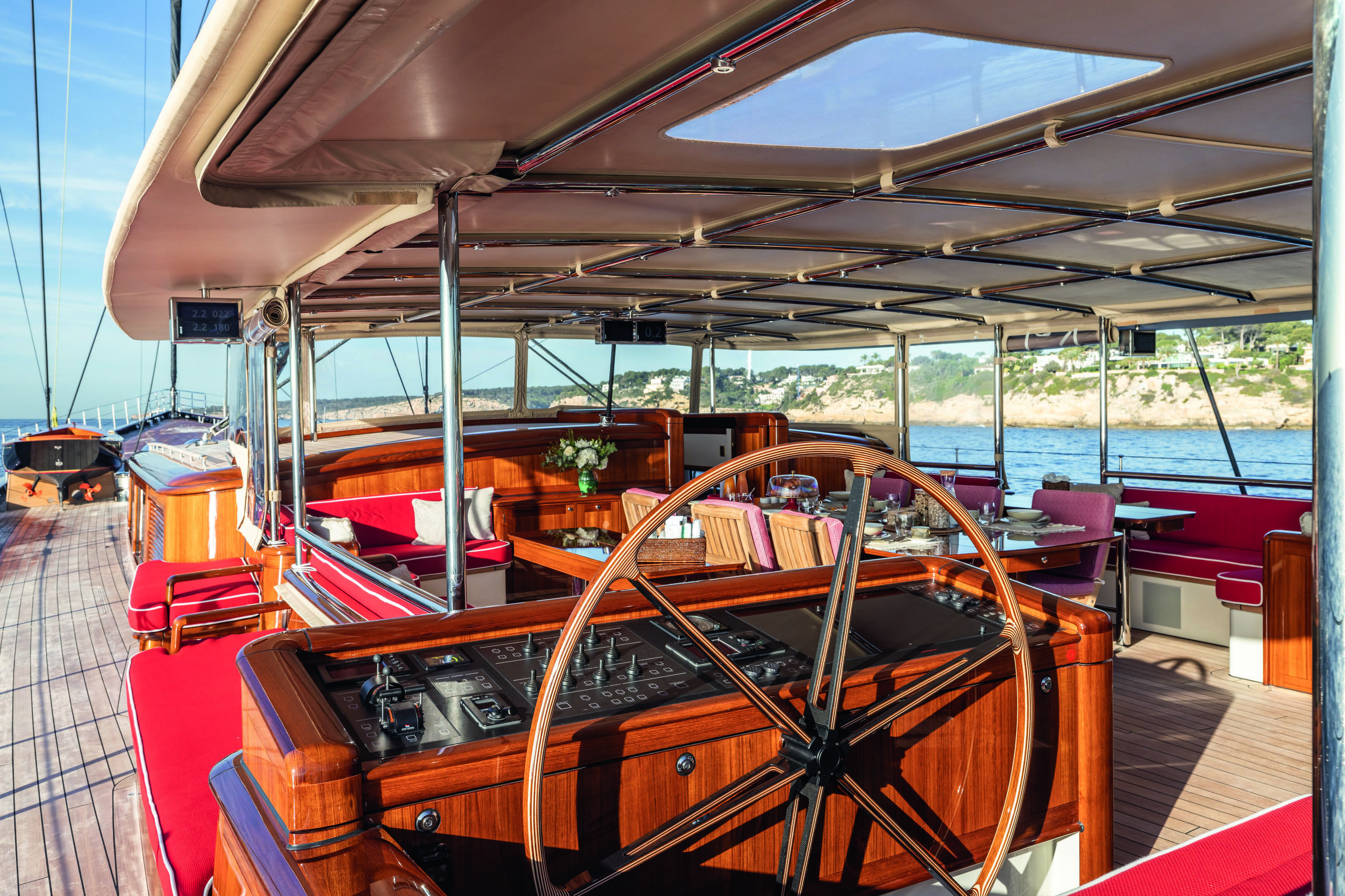
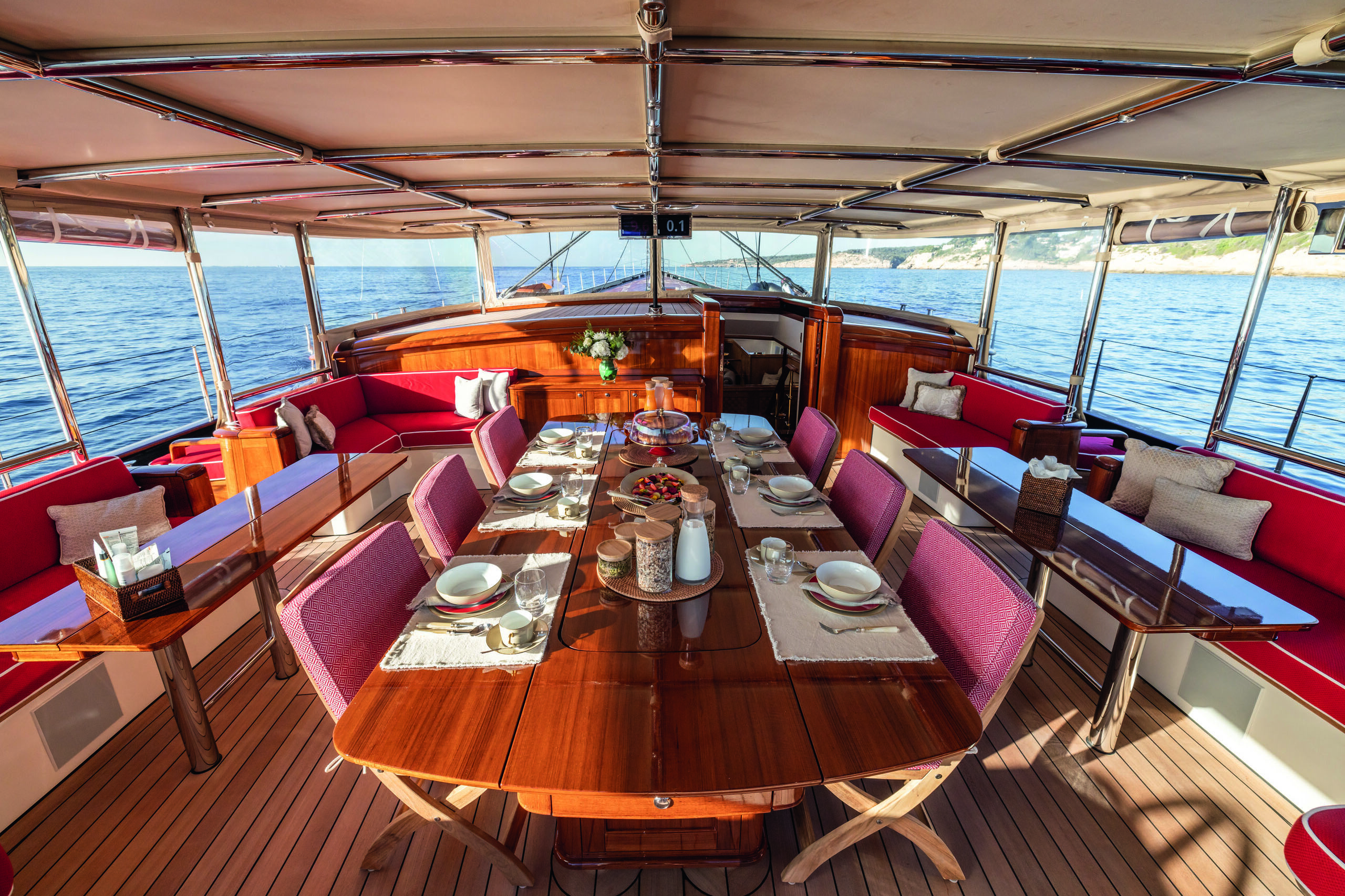
Those lucky enough to drive Maximus will do so at the twin helm stations, which feature custom-made wheels, finished in a gleaming varnish. The helm stations are found at the centreline, just aft of the main cockpit, situated between the two masts. The convivial cockpit can morph depending on use, with the large dining table at the centre folding down during sailing or expanding to host theme-night dinners for charters.
The canons are fired to celebrate the end of a race. “They are not that large or heavy, but they make a lot of noise!”
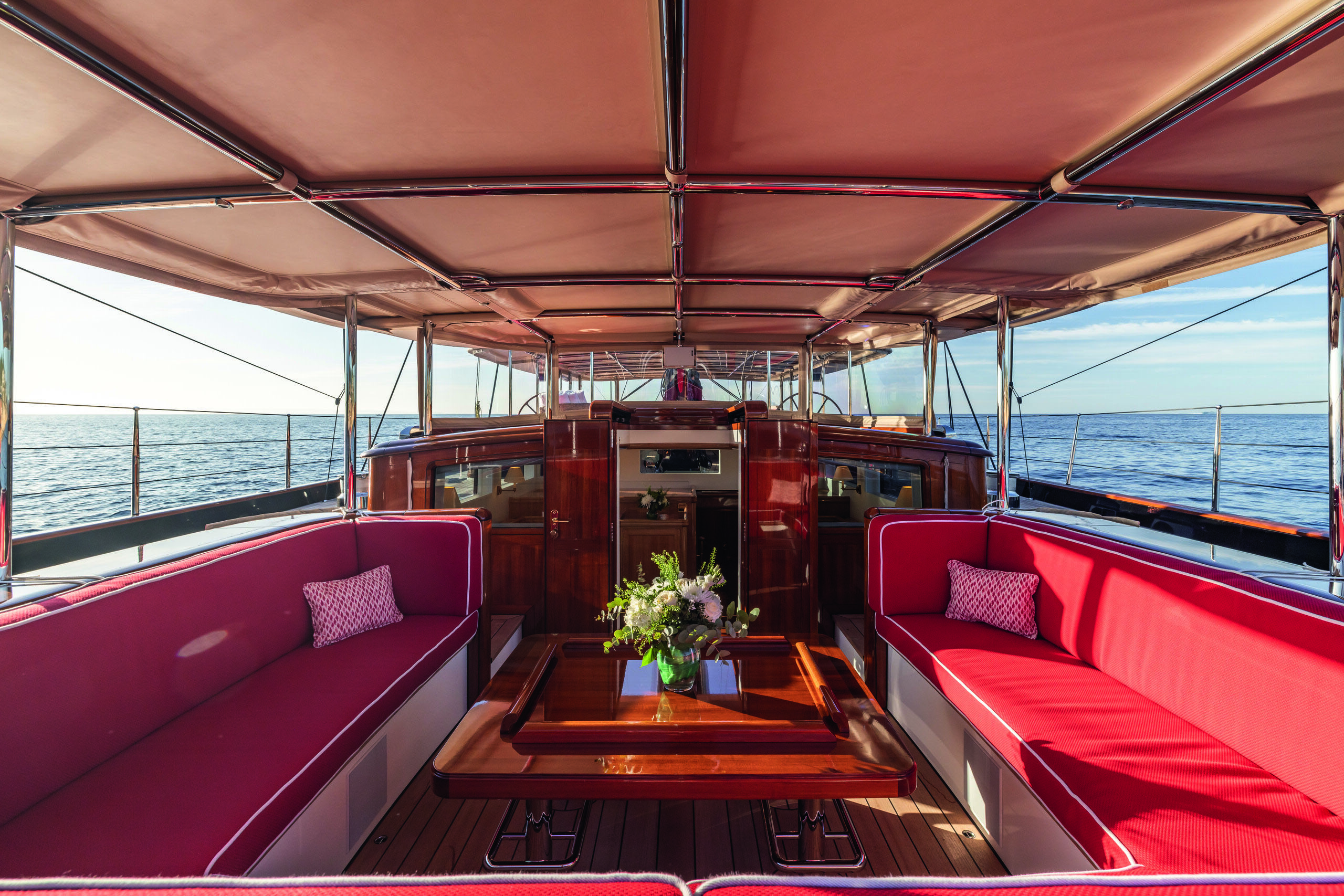
The space is welcoming for guests even while under way, with a fiddle that slots in around the side tables so they can have lunch outside, served in bento boxes so the food doesn’t go flying. The smaller owner’s cockpit set aft is a favourite space on board – the crew describes it as the prime position to enjoy the sailing when you want to be out of the cross hairs and be able to simply sit back and enjoy the ride.
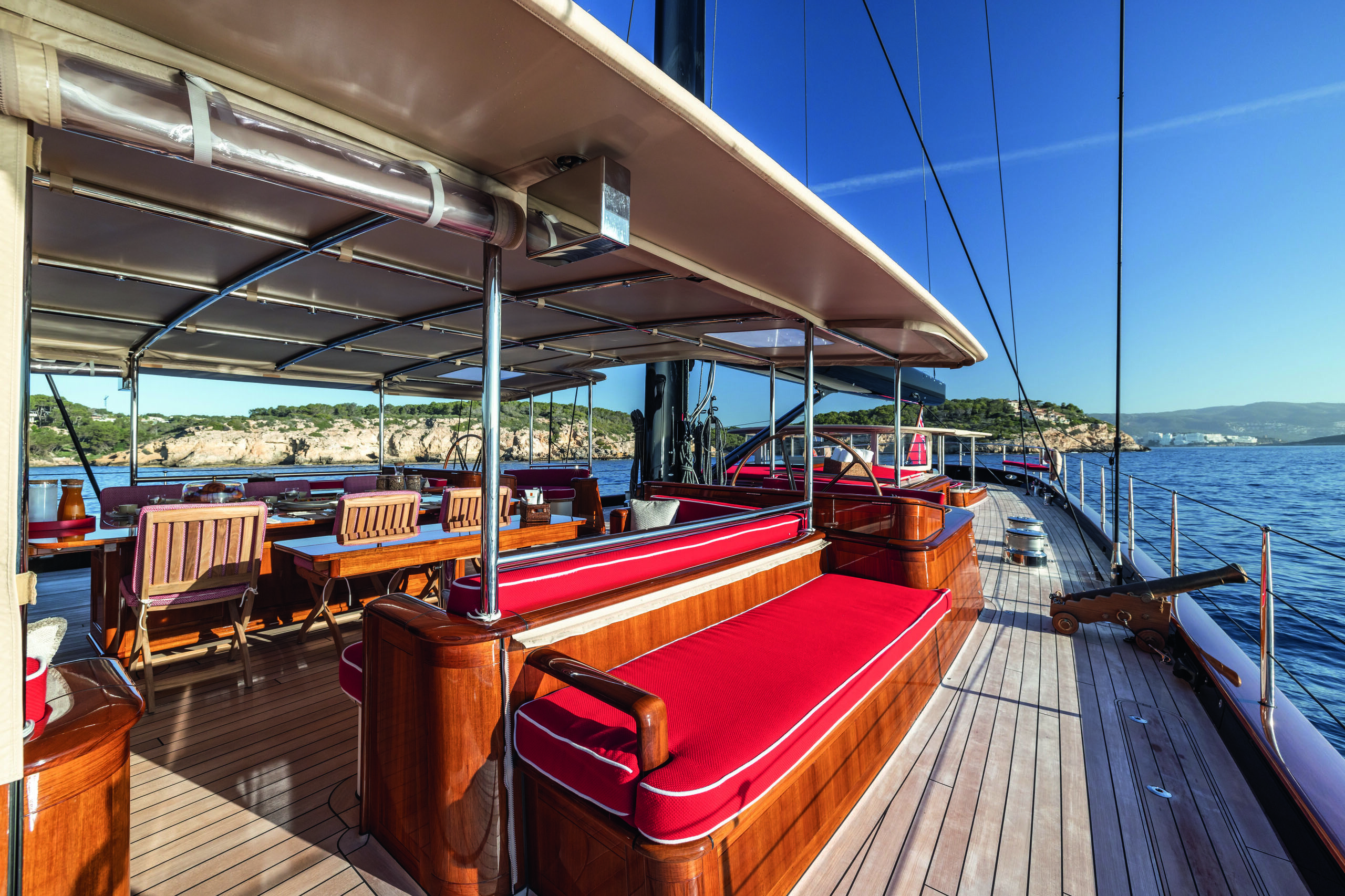
Upon stepping on board, I’m introduced to Maximus’s canon master, another giveaway that this yacht belongs to Marie’s owner. Marie was also laden with antique weaponry on display inside and working canons on deck.
The canons are loaded with tinfoil stuffed with a bit of gunpowder, which mimics the sound of an explosion, and are fired to celebrate the end of a race, rather than to ward off marauding pirates.
Hidden in a locker in the deck until they are needed, the canons look substantial but thankfully weigh only 50 kilos each, so they don’t inhibit weight-saving goals. “They are not that large or heavy, but they make a lot of noise!” says Peute.
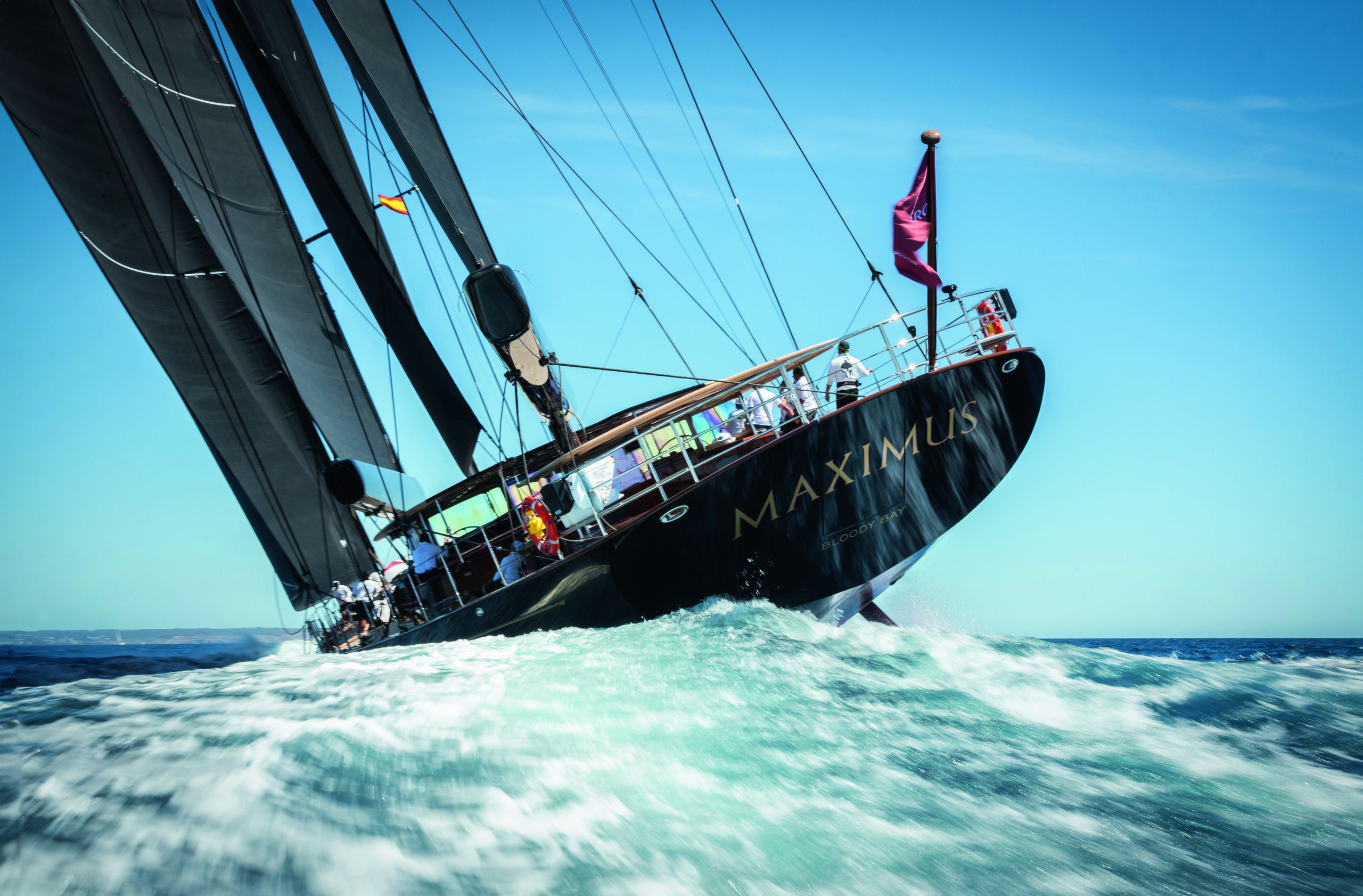
The brief for Maximus was straightforward: to win regattas and look good while doing it, so performance was prioritised over things like being able to slip through the Panama Canal. With an air draught of 64 metres, Maximus isn’t Panamax, a compromise for the sake of racing prowess. “We can’t go under the bridge; we have to go the long way around,” says her captain, Lars Loftus, who rotates with Captain Andy Lytle.
“The crew described the smaller owners’ cockpit as the prime position to enjoy the sailing when you want to be out of the cross hairs”
Maximus features a carbon-fibre rig by Southern Spars, flies Doyle sails and has Harken deck equipment. “The spars and rigging are stateof-the-art cruising with roller furling main and mizzen booms and a sophisticated combination of carbon fibre standing rigging,” says Frers. From the sailplan to the rigging and the deck layout, optimisation was the name of the game to get the most out of the boat. Both rigs carry square top sails and have automated running backstay systems.
Race ready
Maximus was built to race, and race she has. She won her class at the 2024 Superyacht Cup Palma, edging out Cervo by just one second in a dramatic finish. Making the Palma win doubly impressive was the fact that it was just her second major event.
She’s also crossed the pond and competed in the Safe Harbor Race Weekend in Newport, Rhode Island, where she met her stylistic muse Rebecca on the racecourse in a hotly anticipated race. At the 2026 St Barths Bucket, she was tied for first going into the final race in a highly competitive class – unfortunately, racing on the last day was cancelled due to heavy winds, but she still took second in her class.
“As tactician and team leader on Maximus, I had a front-row seat to how the polished race team pushed this state-of-theart ketch to her limits,” says Tony Rey, SuperYacht Racing Association (SYRA) president.
“What a thrill it is to pass a few metres from a rocky shoreline off St Barths with full confidence in a team of 30-plus sailors, knowing they will pull off even the trickiest sail-handling manoeuvres.”
The Bucket is one of the many SYRA-sanctioned regattas. Here’s a look at those taking place in the Med this summer, with commentary from SYRA manager and double Olympic gold medallist Shirley Robertson on what makes each unique.
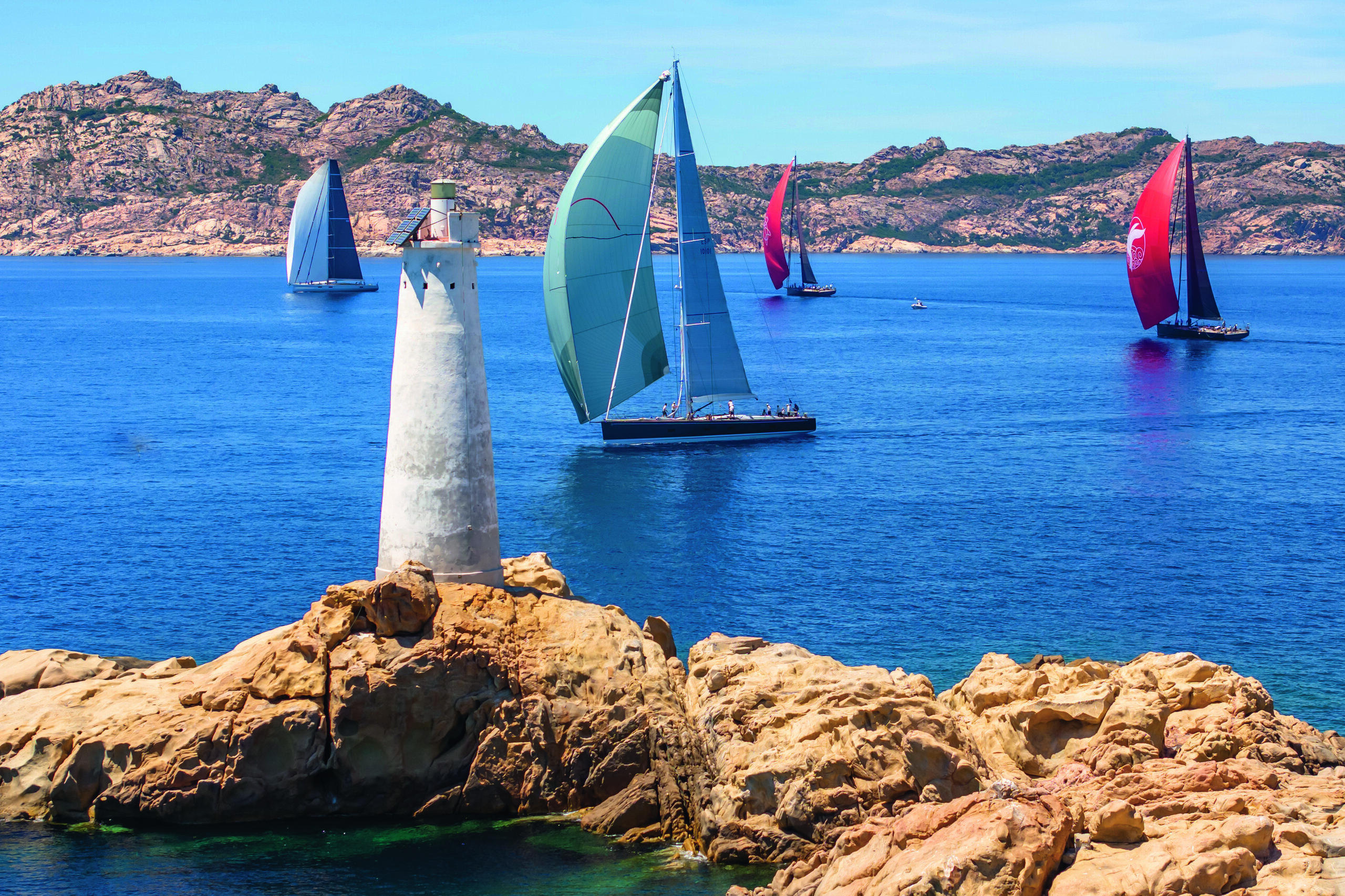
GIORGIO ARMANI SUPERYACHT REGATTA
26 to 30 May, Sardinia, Italy
“Organised by the Yacht Club Costa Smeralda, this superyacht regatta is as chic as it sounds. The Maddalena Archipelago offers fantastic sailing with stunning scenery, all with an extra dose of Italian style.”
YCCS Studio Borlenghi
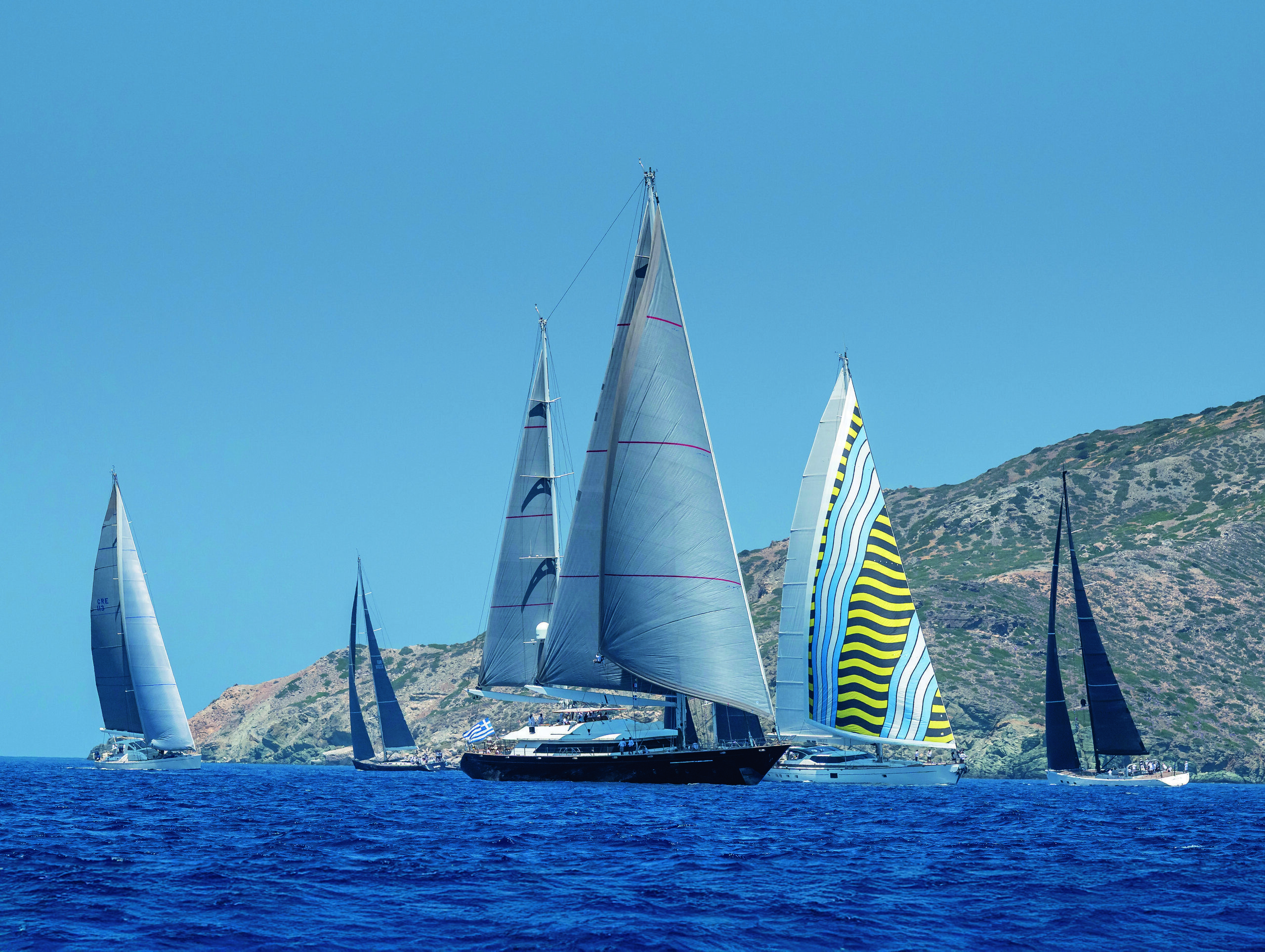
CYCLADES CUP
10 to 13 June, Antiparos, Greece
“This owner-led and -oriented regatta is a particularly intimate gathering. The relaxed ambience created on the island of Antiparos is something very special.”
Kurt Arrigo
SUPERYACHT CUP PALMA
24 to 27 June, Mallorca, Spain
“Celebrating its 30th edition, the Superyacht Cup remains an icon of the Med season events. Expertly organised racing paired with that guaranteed Palma breeze means this regatta never disappoints.”
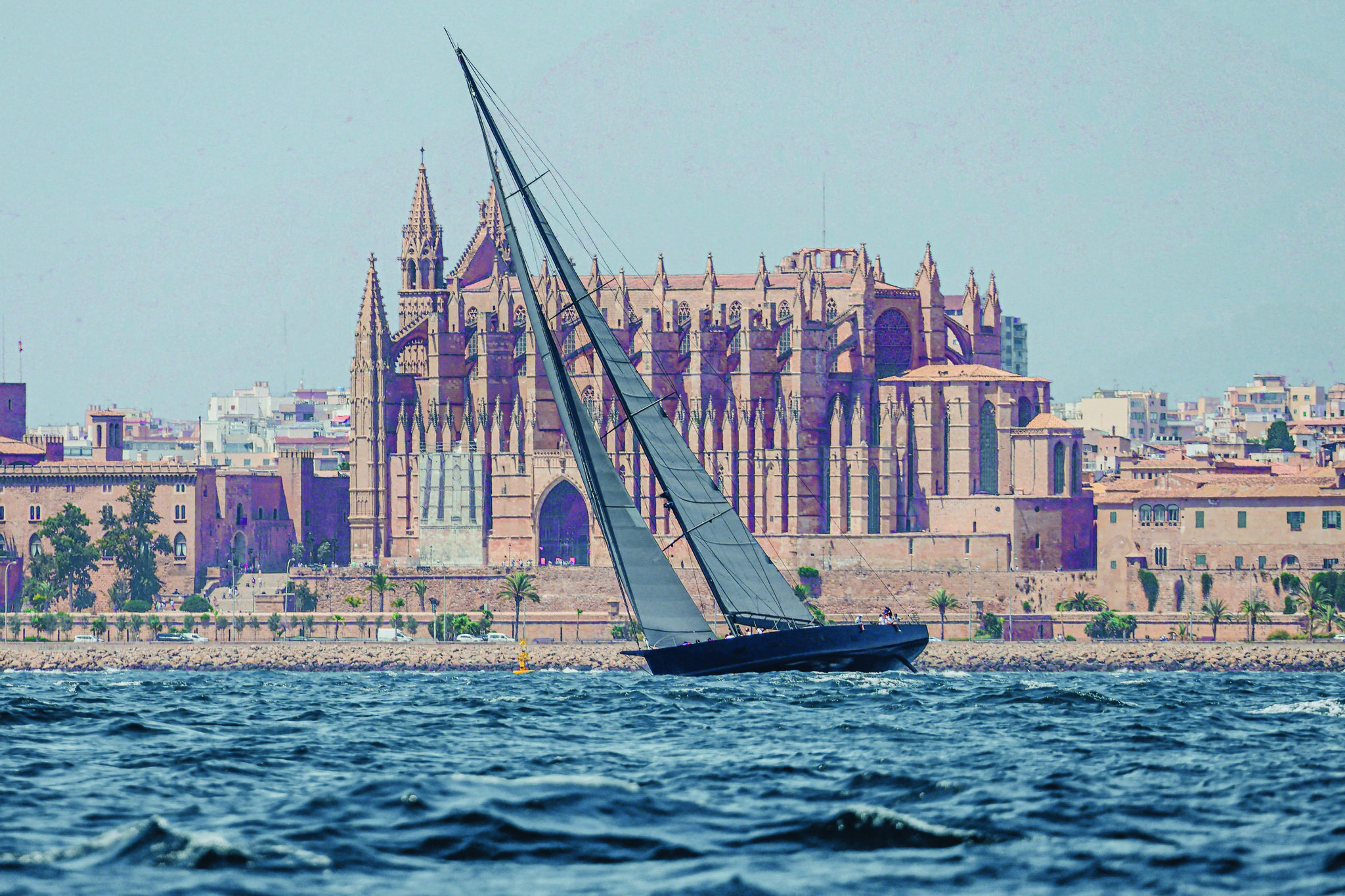
Sailing Energy : The Superyacht Cup
IBIZA JOYSAIL
17 to 20 September, Ibiza, Spain
“The clue is in the title. Ibiza and the joy of sailing – what more could you ask for?! It has become a firm favourite for owners and crew alike.”
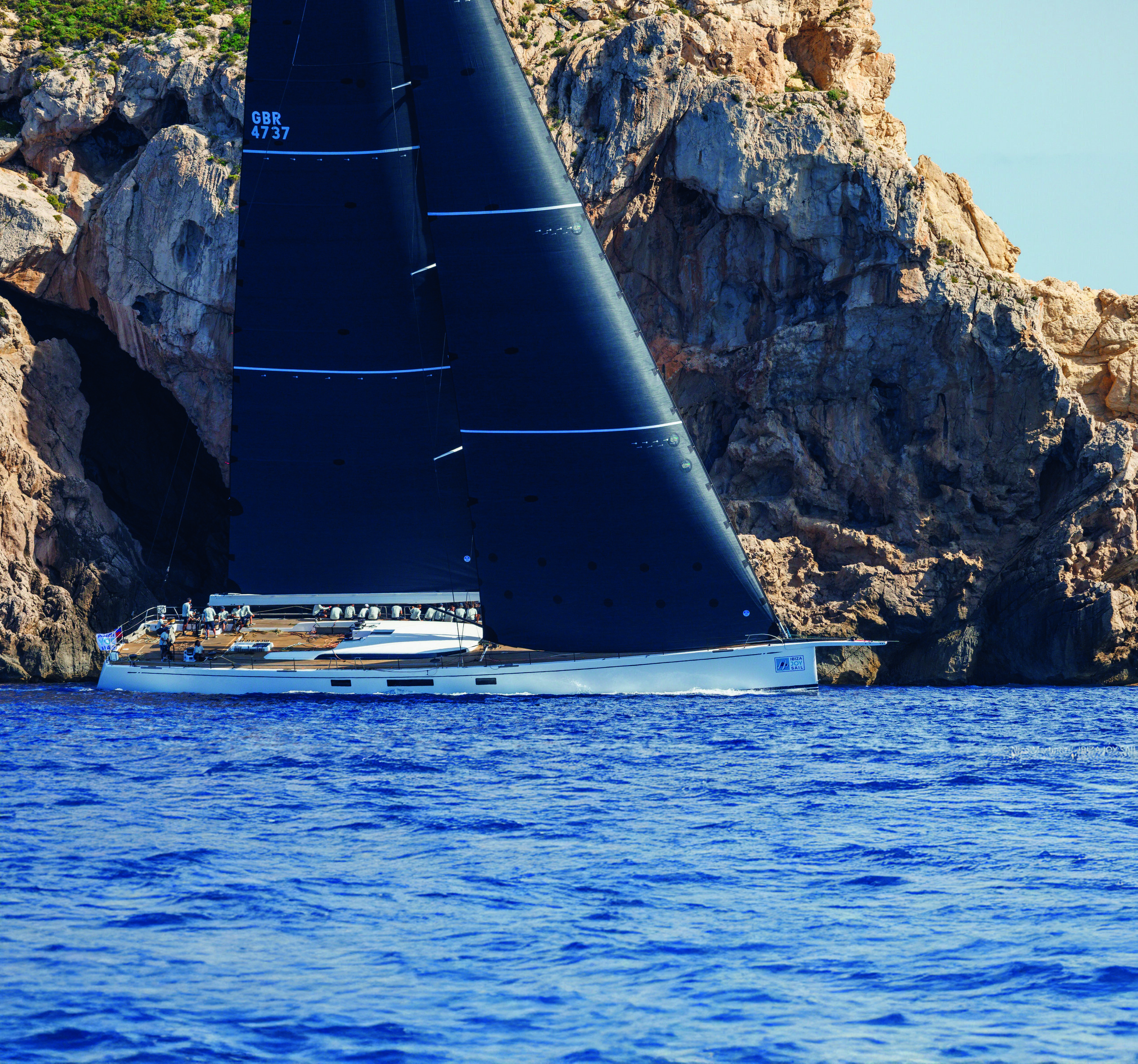
Nico Martinez
Once again, the build team was able to tap into their previous experience from another sailing yacht to perfect Maximus. “Germán Frers, Vitters Shipyard and I had previously collaborated on the highly successful 46-metre sloop Unfurled with Steve Wilson of Southern Spars, so we had a strong foundation and a shared understanding of performance-driven rig design with advanced furling and reefing,” says Barrett. “Much of that experience and technology carried directly into Maximus, giving us a very solid starting point.”
Unlike Unfurled, Maximus has a mizzen mast. During the design and testing phase, the mizzen grew by approximately five metres, says Barrett, as the team refined the sailplan with Doyle. “A significant amount of effort went into optimising the interaction between the mizzen and the headsail configuration – particularly mizzen staysails and mizzen jibs,” Barrett adds.
“The performance gain from the mizzen jib has been especially notable, both in terms of power and balance.” Maximus is equipped with both racing and cruising mizzen jibs. This allows the yacht to be optimised for competition when required, while also offering a more conservative and manageable configuration for offshore passages, particularly when sailing under staysails.
The deck was studied to enhance functionality during racing. “Also based on the Unfurled concept, we placed the mainmast captive winches and the mainmast halyard winches on a well deck about four feet [1.2 metres] below the main deck, increasing the blade jib winches to a 25-tonne pull, a first for Harken,” says Barrett.
During racing, the carbon hatches that cover the lockers are put ashore, and the pit crew manning the winches work from the lower deck, able to poke their heads out for good visibility without getting in the way.
Meanwhile, the large primary drum winches on the main deck pay tribute to J Class heritage – keeping sheet handling clear of guest areas while allowing for flexible cross-sheeting options across the open deck.


But compared to a J Class, Maximus is far more powerful. “Maximus is classic and elegant looking, but when you lift her out of the water, you see a very modern hull with a lifting keel, a lead bulb and two rudders. That’s something you don’t imagine on the boat,” says Peute. “She’s a performance-oriented sailing yacht, which is what we like to do at Vitters, and she has a high level of comfort.”
After racing concludes, Maximus transitions back to cruising mode, though the piano stays on either configuration
That comfort is first noticed in the cockpits but fully appreciated when stepping inside. Having worked with the owner previously on a residential project, Spencer-Churchill Designs was tapped to create the classically styled interior. “His brief was to have it the same as Marie, and I said ‘that’s 12 years old, we could upgrade it a bit’,” says Henrietta Spencer-Churchill, founder of Spencer-Churchill Designs.

Comfortable when cruising but surprisingly powerful when she takes to the racecourse, Maximus is the ultimate wolf in sheep’s clothing || PHOTONAUTIC
Comfortable when cruising but surprisingly powerful when she takes to the racecourse, Maximus is the ultimate wolf in sheep’s clothing || PHOTONAUTIC
The designer suggested more interesting bathrooms with hardware and accessories from THG Paris and Samuel Heath. Lapis lazuli taps are used in his bathroom, and a pink onyx in hers, while the guest baths have cream onyx fixtures. In his bathroom, the shower doubles as a steam room. “The walls look like lapis lazuli marble, but it’s actually a painted laminate as it had to be thin and light,” says Spencer-Churchill.
“Lighting was also very important, as you don’t get a lot of natural light below”
These design choices are complemented by a light colour scheme, with high-gloss anigre joinery predominant throughout and creamy toned custom upholstery from Dudgeon Sofas punctuated by red and blue throw cushions. Custom carpets by Concept Carpets were woven in Nepal.
“Lighting was also very important, as you don’t get a lot of natural light below,” says Spencer-Churchill of the lower-deck saloon. Lighting fixtures come from Charles Edwards, Vaughan Designs and Visual Comfort.
Maximus comfortably accommodates 12 guests in four cabins, with a full-beam master suite with a California king bed, a VIP and two convertible double/twin cabins, each with a Pullman berth. Flexibility was key to Maximus’s design, and a small lounge in the owner’s deckhouse can convert to small beds for charter guests who want to have kids sleep nearby, within earshot of the master below.
This space can also be closed off from both the owner’s cockpit above and the owner’s suite, creating a private space where guests can take phone calls or conduct business. With the similar notion of flexibility and privacy in mind, the dining room, off the main saloon on the lower deck, has pocket doors that slide closed so that the room can be used for meetings or conference calls.
The overall brief was straightforward: to win regattas and look good when doing so

Taking pride of place in the main saloon is a Steinway Baby Grand piano. After racing concludes, Maximus transitions back to cruising mode, though the piano stays on in either configuration. It is in keeping with the yacht’s classic styling, and it’s also put to good use by the owner’s musically gifted friends, who include an opera singer who has come on board a few times to give private performances.
Whether holding her own on the racecourse or hosting concerts, Maximus represents that hard-to-achieve marriage of power, grace and comfort that will make her a standout for years to come.
First published in the June 2026 issue of BOAT International. Get this magazine sent straight to your door, or subscribe and never miss an issue.


A 7m Xtenders boat stows under deck
Skylights bring the sun into the VIP cabin and dining room below
The upper saloon features a bar and cosy seating area
Tender boarding takes place amidship via a hydraulic side platform
The galley is arranged for a chef and steward to work simultaneously
A Steinway Player piano and an ethanol fireplace bring a residential feel to the lower main saloon
Cabins convert between twins and a king and each has a Pullman berth
The owner's suite has His and Hers en suites with a steam shower in His and a whirlpool bath in Hers
LOA 59m | Fuel capacity 32,775 litres |
LWL 48.73m | Freshwater capacity 9,200 litres |
Beam 10.2m | Tenders 1 X 7M XTENDERS DIESEL JET; 1 X 4.2M ZODIAC PRO 500 RIB |
Draught (keel up/down) 5/8m | Owners/guests 12 |
Gross tonnage 395GT | Crew 9 |
Engines 1 X 1,199HP MAN V12 D2862 LE435 | Construction |
Generators 2 X 720KW Zenoro | Classification Lloyds Register |
Sails Doyle | Naval architecture Frers Naval Architecture and Engineering |
Mast and boom Southern Spars | Exterior design Frers Naval Architecture and Engineering |
Rigging Future Fibres ECG | interior design Spencer-Churchill Designs |
Sail area (downwind) 3,303m2 | Builder/Year Zwartsluis, The Netherlands +31 (0) 3838 67145 info@vitters.com |
Speed under power (max/cruise) 13/11 knots | For sale |
Range at 11 knots 3,000nm | For charter |
 Built with Shorthand